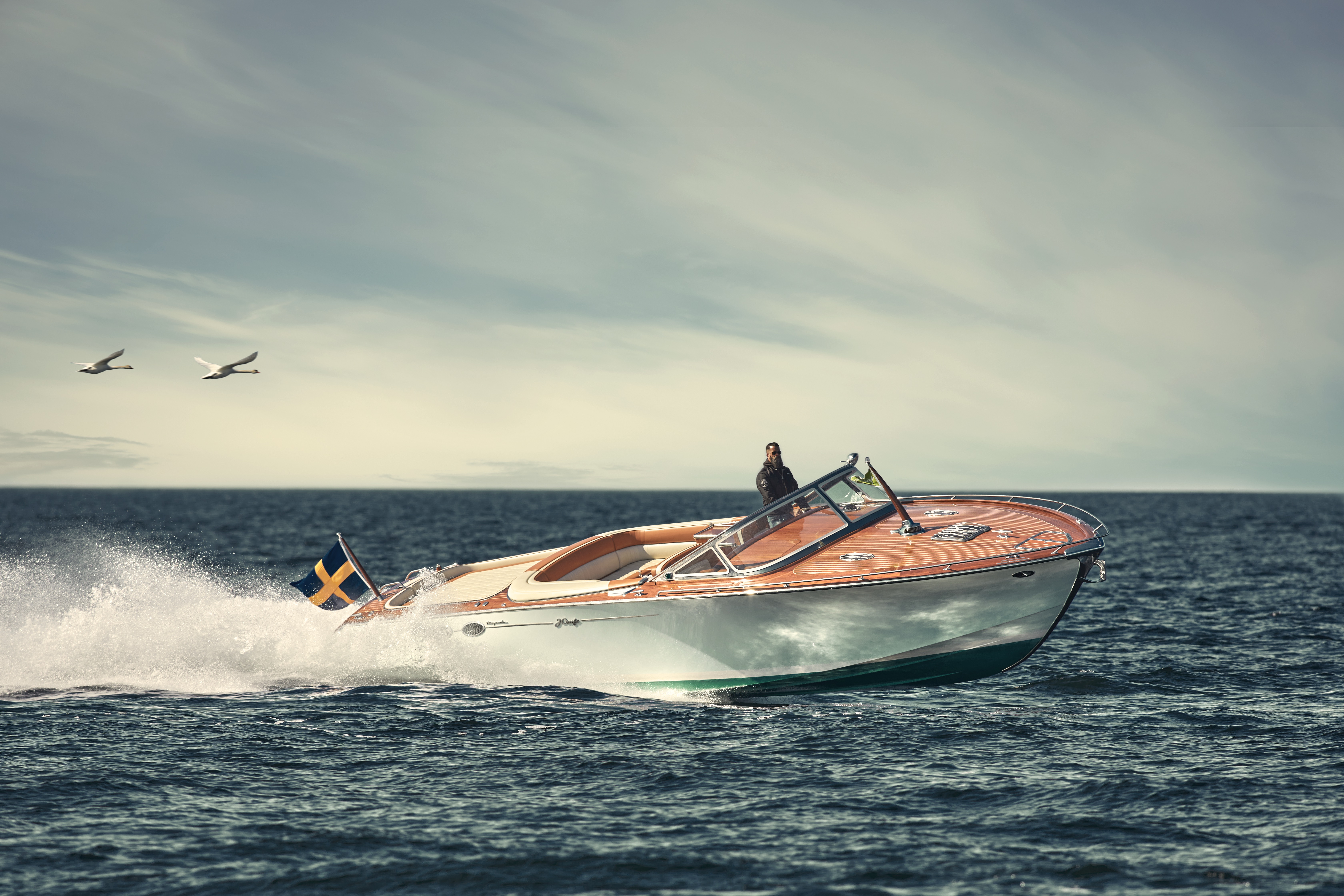
Journal #44
Wood, Fibreglass, and the Truth About Maintenance
A classic J Craft Torpedo looks as though it belongs to the great age of wooden runabouts, but its real maintenance story is shaped by modern composite engineering and carefully placed mahogany.
Published July 9, 2026
Words by: J Craft
There is a particular kind of beauty that makes people cautious.
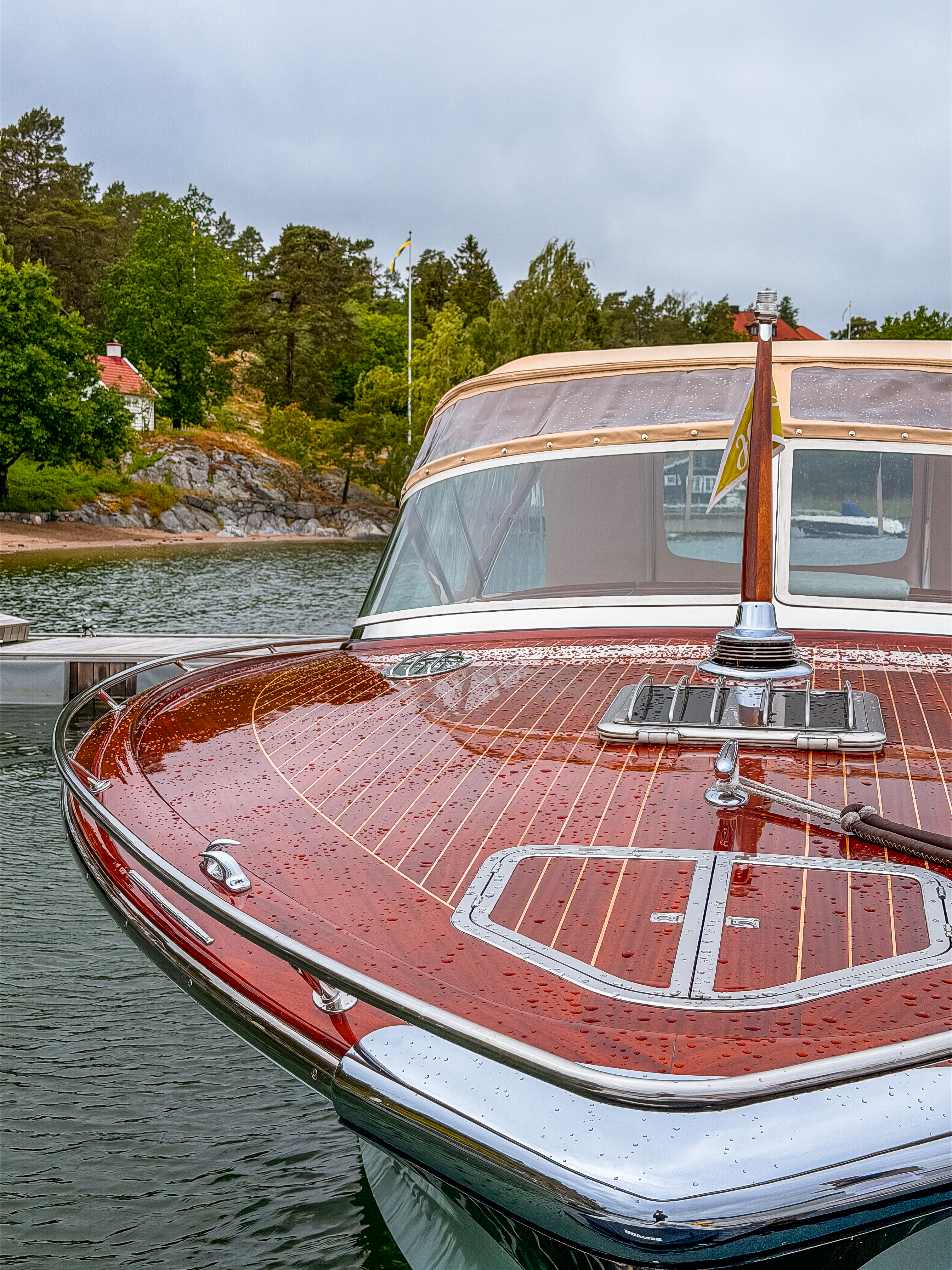
It is easy to admire from a little distance: a varnished transom catching late afternoon light, a sweep of mahogany running cleanly along the deck, the warm depth of timber against polished metal and leather. It belongs to the same emotional family as a vintage Ferrari, a hand-built Riva, an old Chris-Craft in a boathouse, or a drawing room whose furniture has been repaired rather than replaced for generations.
But admiration can quickly become calculation. How much care does this require? How much time? How much patience? How often must beauty be defended from weather, salt, sun and use?
That question matters, because it sits quietly behind many conversations about classic boats. The heart says yes. The head begins to imagine sanding blocks, swelling timber, moving seams, winter storage, annual varnish work and a small army of specialists.
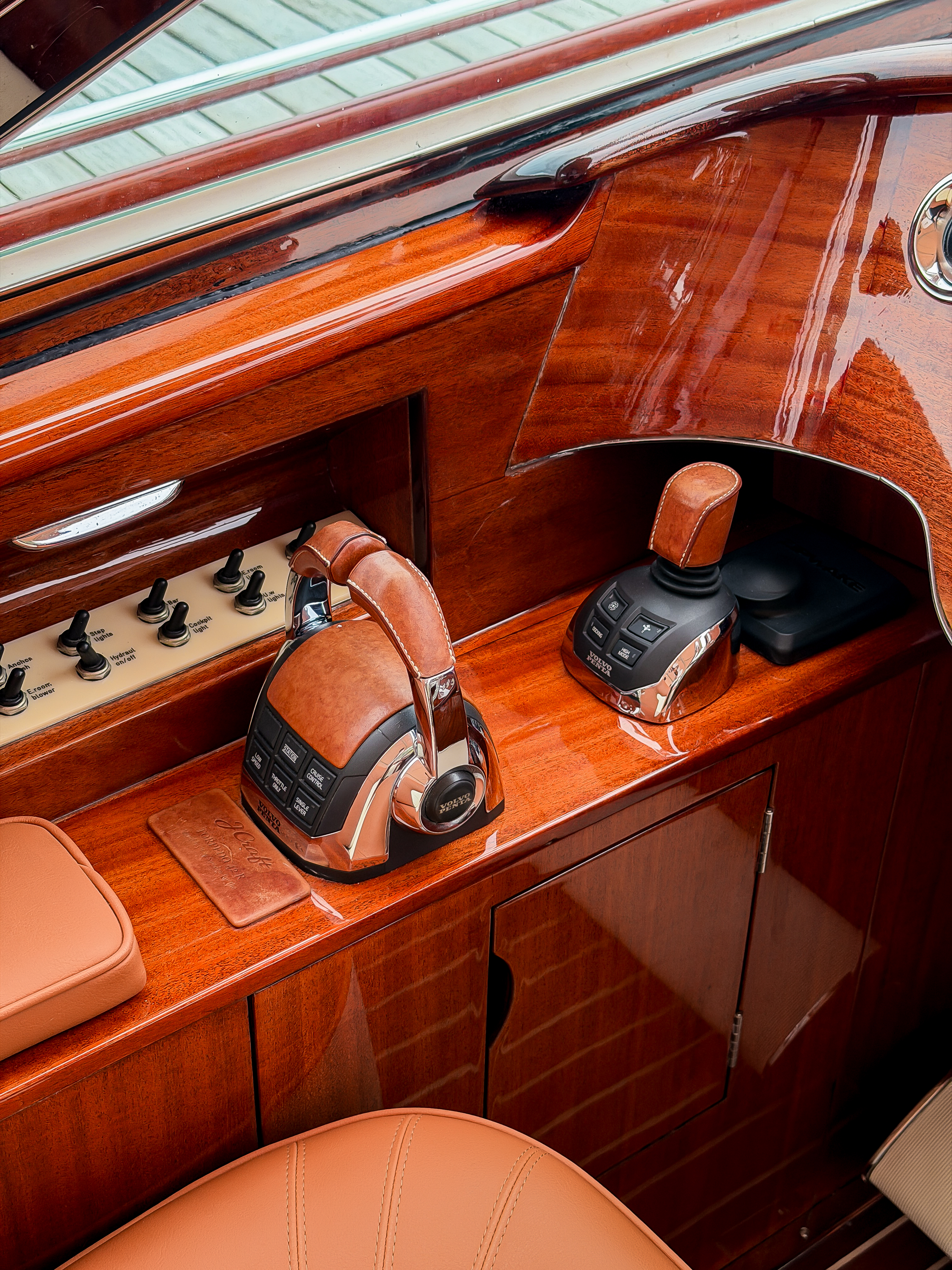
J Craft exists in that space between desire and doubt. The Torpedo looks, at first glance, as though it belongs to the great age of wooden runabouts. That is deliberate. The long foredeck, the tumblehome, the mahogany, the Nardi wheel, the analogue gauges and the low, cinematic profile all speak a fluent mid-century language. They remind people of a period when boats, cars and aircraft seemed to be drawn by hand rather than generated by committee.
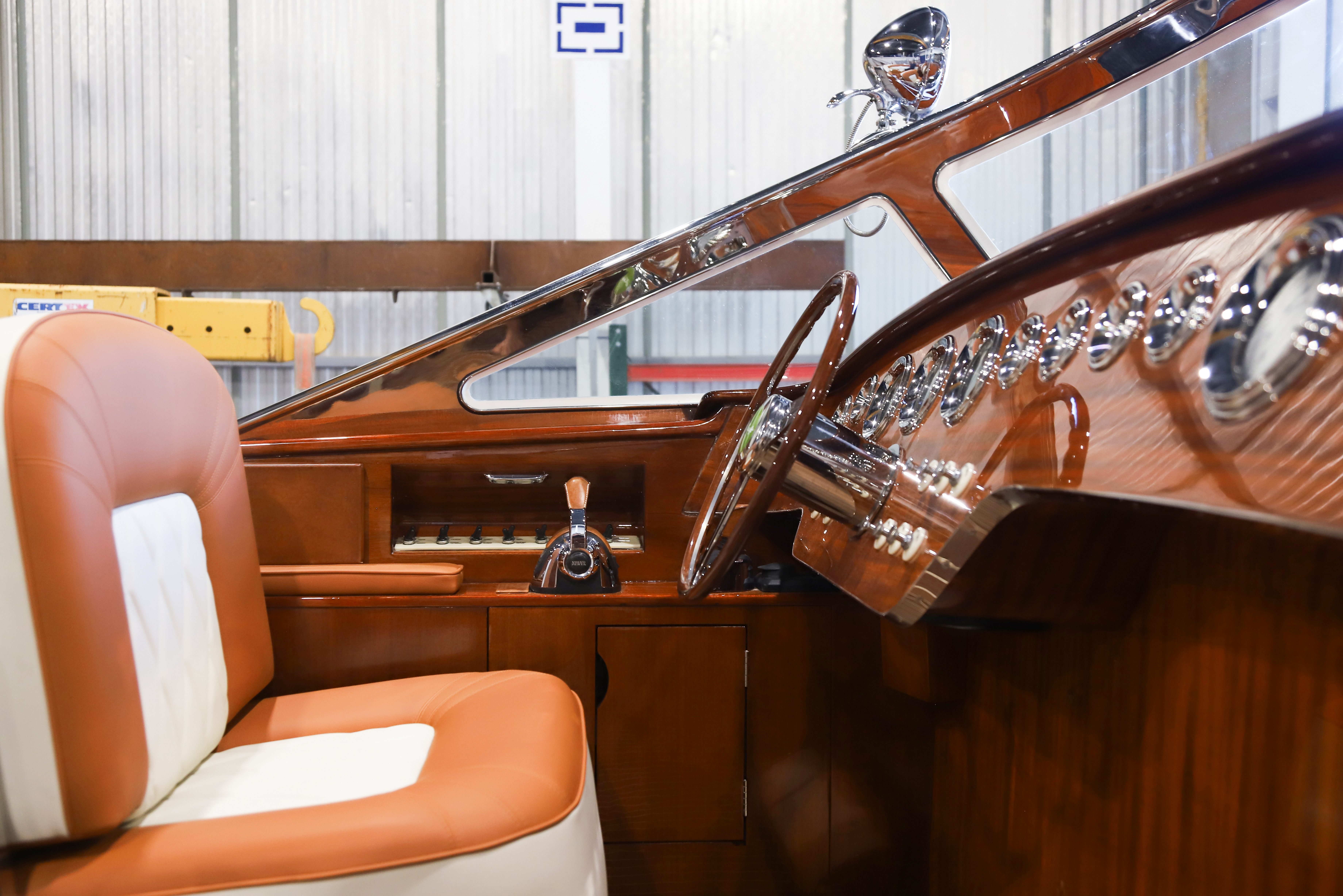
Yet beneath that familiar surface is a different truth. The Torpedo is not a wooden boat in the old structural sense. Nor is it a modern composite boat with decorative nostalgia applied afterwards. It is something more considered: a modern hull and structure carrying real wood only where wood does its best work.
That distinction matters in practice.
Traditional wooden boats are loved for good reason. Timber has warmth, grain and memory. It records the hand. It changes in the light. It makes a boat feel alive in a way no synthetic surface can fully imitate. But when wood is asked to be both the beauty and the structure, it also brings obligations. It moves with humidity. It expands and contracts. It absorbs water. It can open, close, twist, swell and crack. Left under a Mediterranean sun or exposed through long seasonal use, even good timber asks to be constantly protected.
For some owners, that is part of the romance. For many others, it is the point at which romance becomes responsibility.
J Craft uses wood where it gives the boat something no substitute can, and keeps it away from the jobs where it would make ownership harder than it needs to be.
The structural work of the Torpedo is carried by a vacuum-infused fibreglass composite hull, engineered for precision, strength and stability. That modern structure is exact in a way traditional timber construction can rarely be over time. It resists moisture. It keeps its shape. It allows the hull to be lighter and more efficient than a comparable solid-wood structure. It supports the Torpedo's speed, range, seakeeping and ease of handling without requiring the owner to live under the shadow of constant structural maintenance.
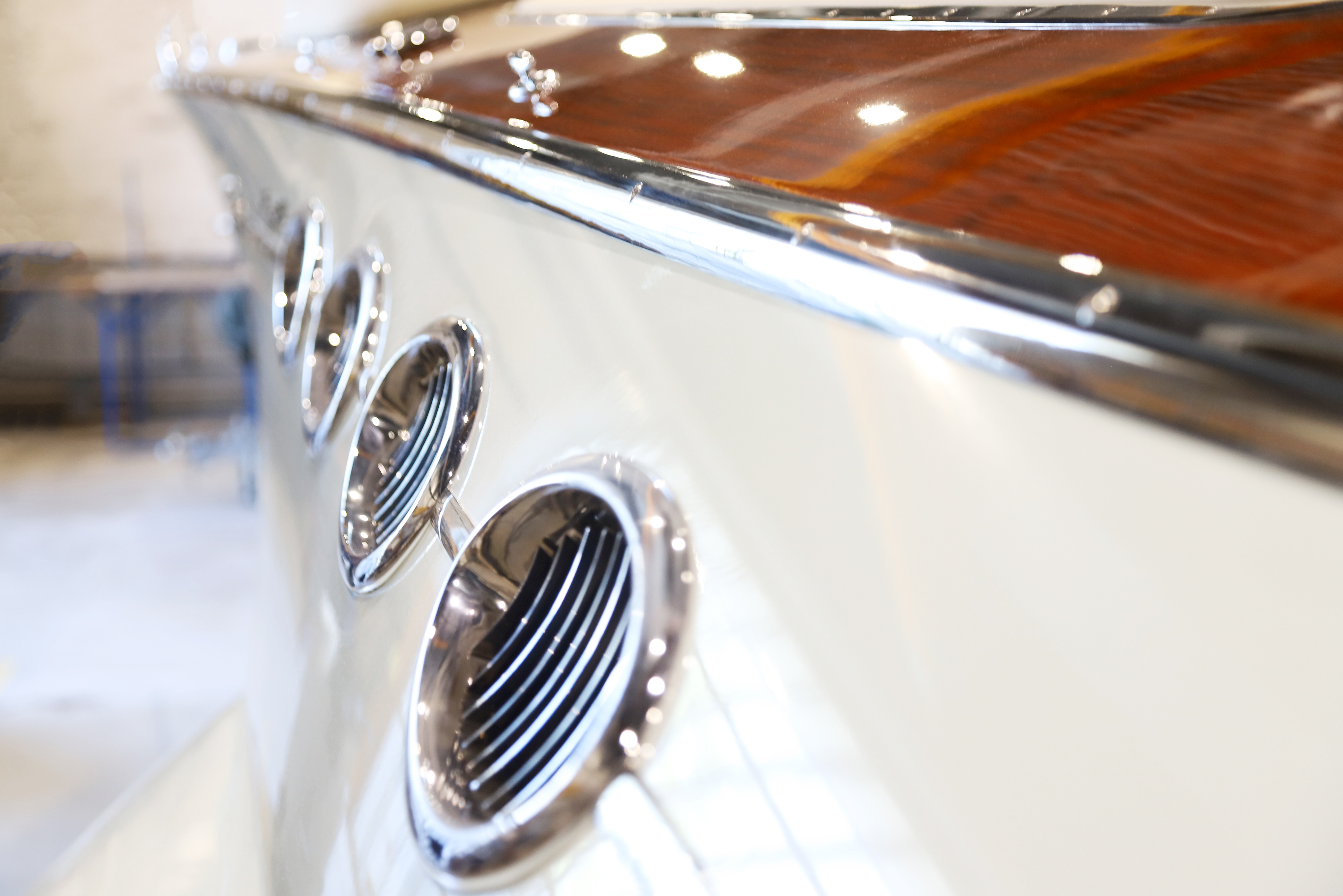
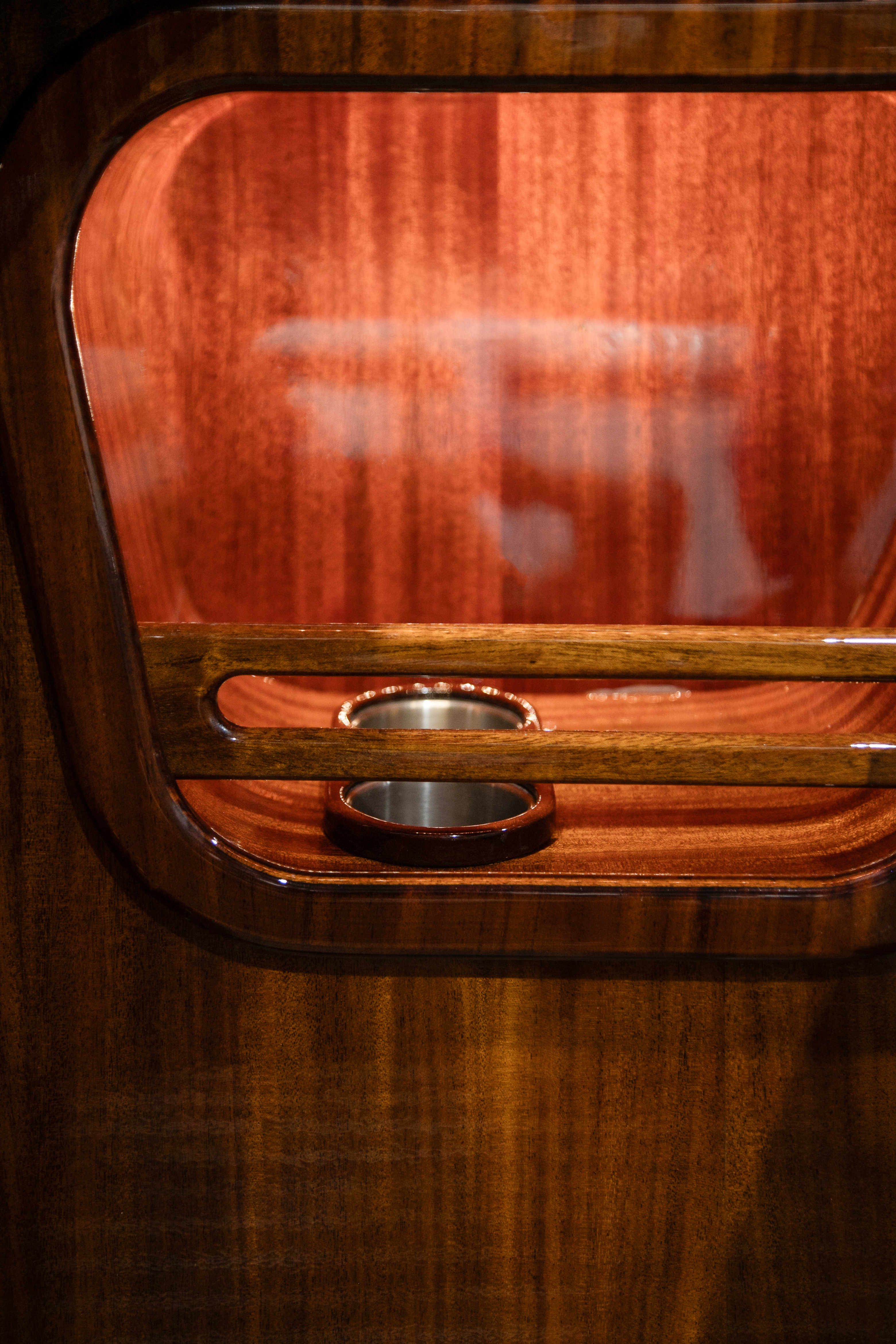
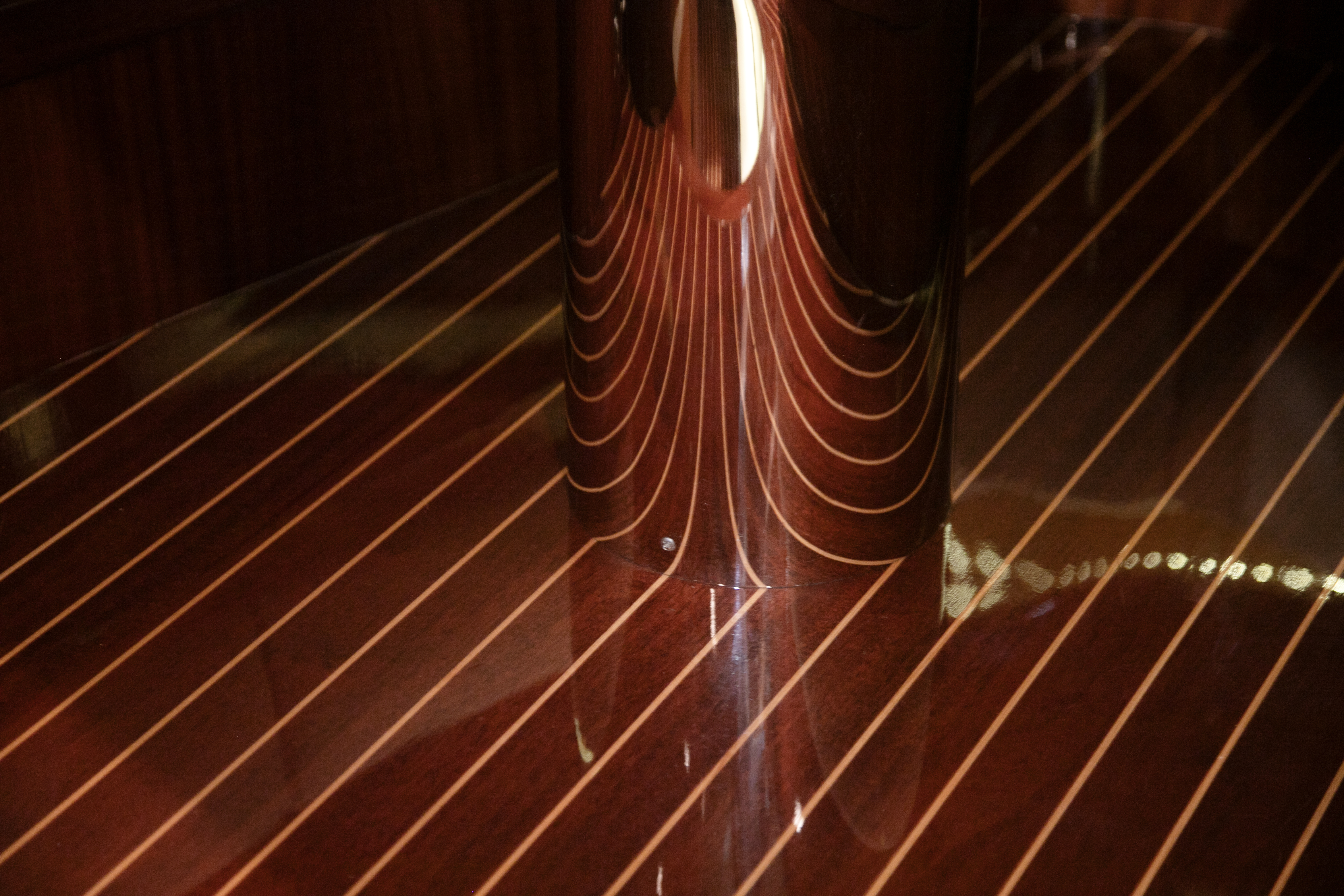
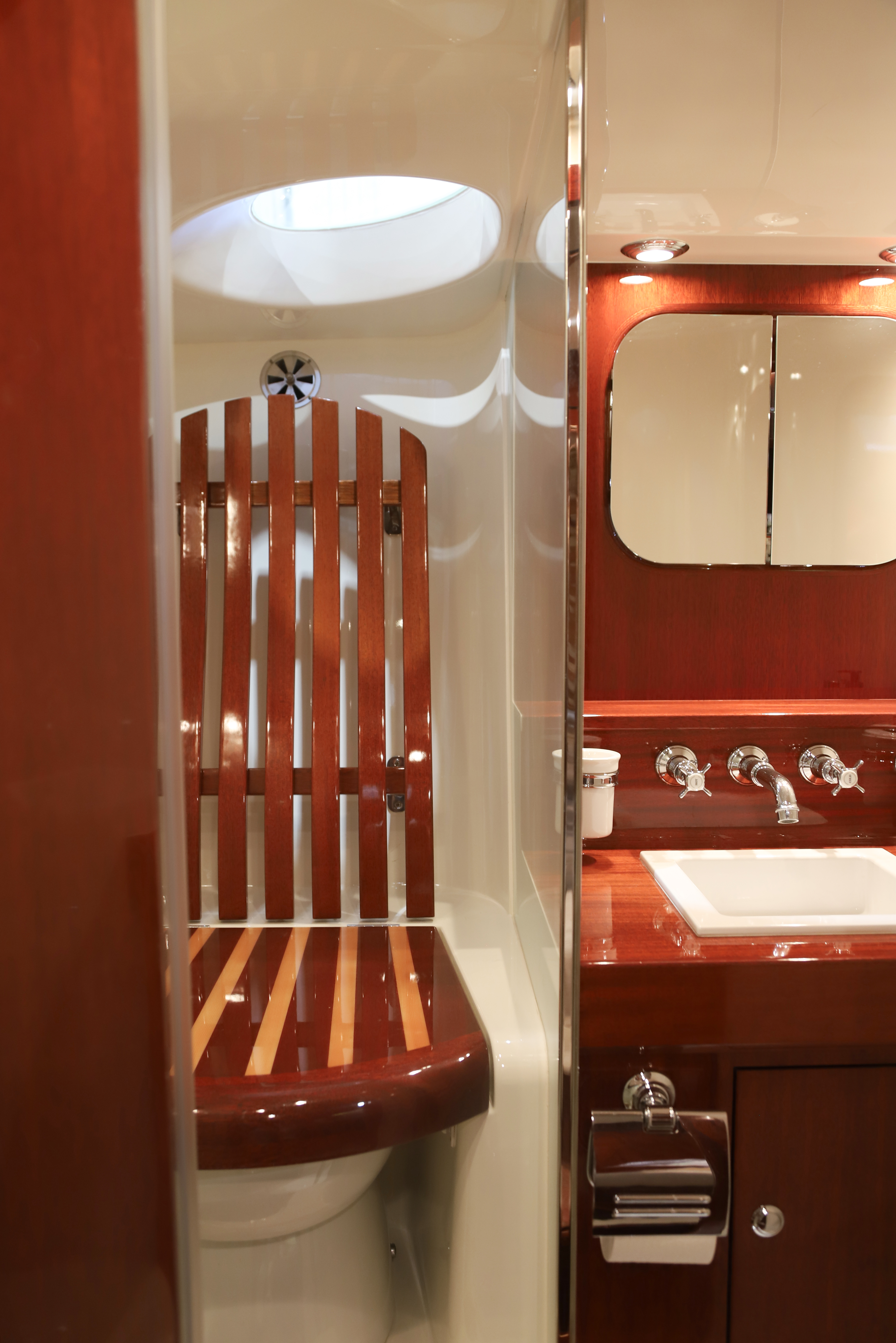
The mahogany remains, but it is used with intent. Narrow, carefully matched strips are hand-laid across the deck and coamings, then finished with 20 coats of varnish until the surface carries the depth and glow people expect from a classic runabout. It is real mahogany. It is not a printed effect, not a theatrical skin, not an imitation of craft. But it is wood placed where it can stir emotion without carrying the burden of open-water structure.
In a Torpedo, mahogany is allowed to be mahogany.
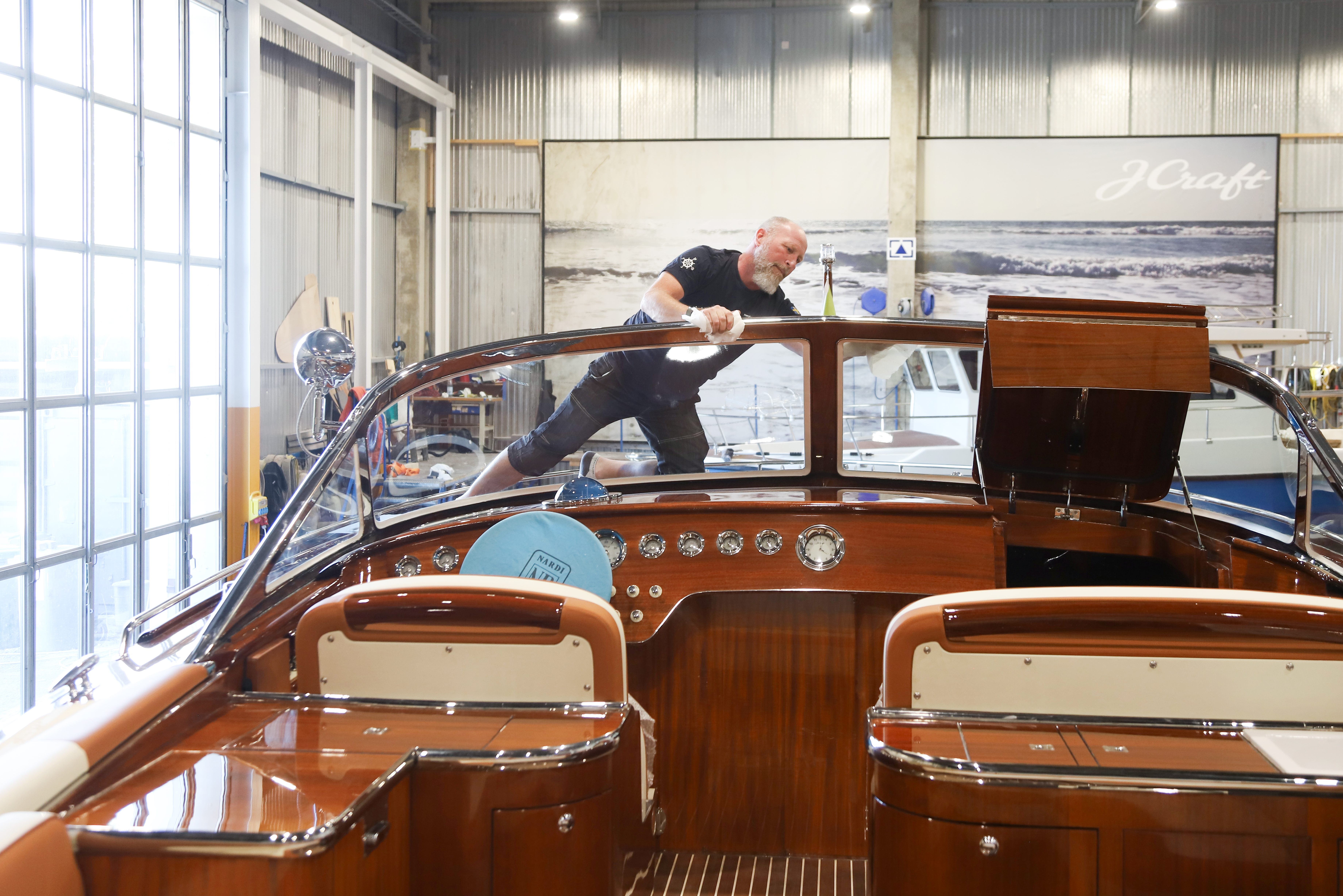
It brings touch, warmth and ceremony. It gives the owner the instinctive pleasure of running a hand across a deck that has been worked, sanded, finished and cared for by people who know what the material should become. It gives the boat her visual soul. The modern composite beneath is what lets that soul live in the real world: the Baltic, the Mediterranean, the Hamptons, the Bahamas, a summer of repeated use rather than occasional display.
From here, the maintenance story changes.
In normal use, J Craft's experience is that the re-varnishing cycle is measured in years, not seasons. A sensible estimate is around seven to eight years between full re-varnish cycles, based on a boat spending roughly six months of the year in the water, with the mahogany deck exposed to the sun for perhaps 10 to 12 hours a day, then covered when not in use and overnight, sprayed off after the day's use and dried down. On that basis, the wood does not fail. It changes. It bleaches gracefully, taking on the softer, lighter tone that many owners associate with a boat that is properly used rather than merely preserved.
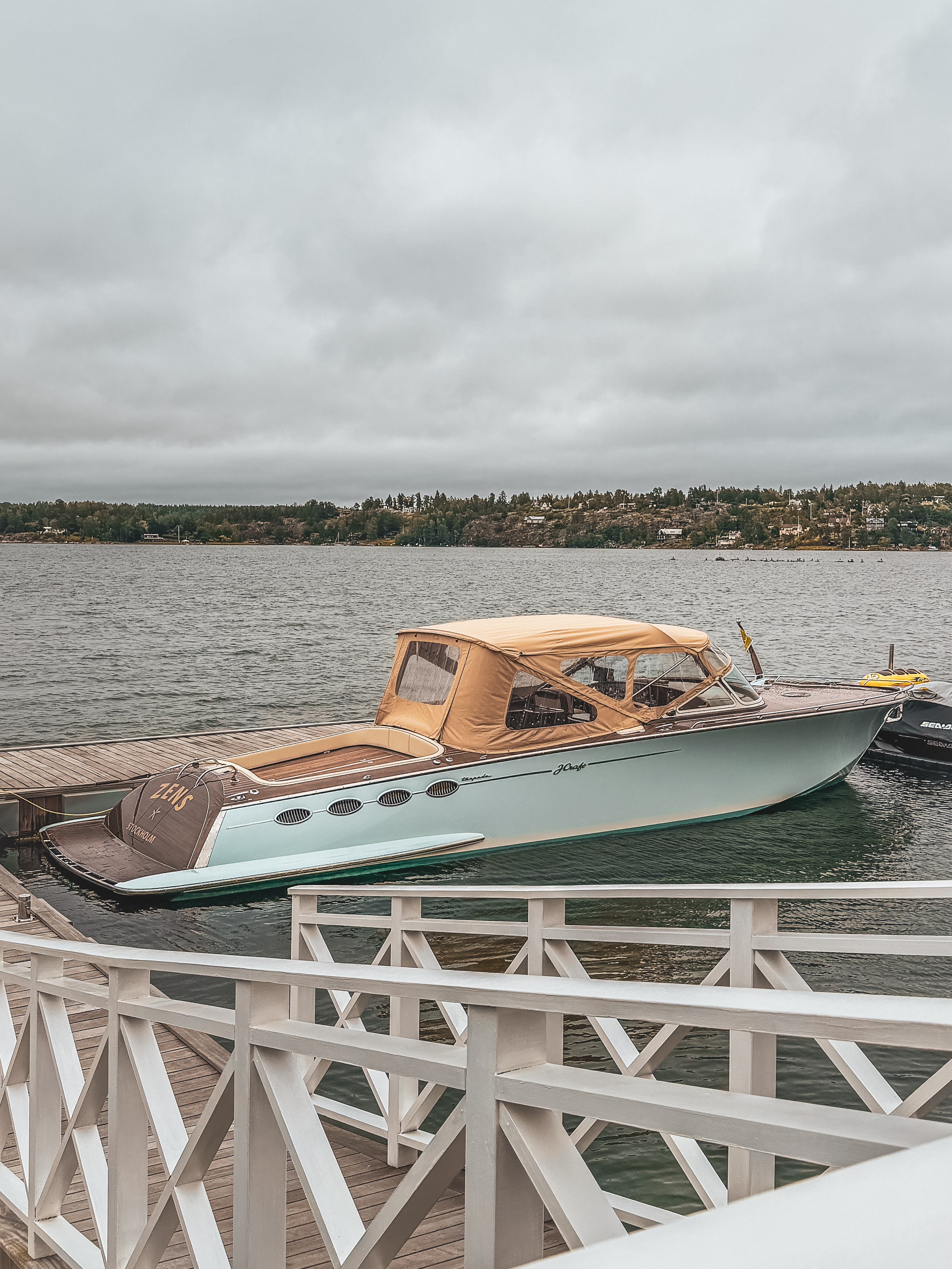
Even that estimate is not an absolute rule. J Craft has Torpedoes that have gone 14 or 15 years without being re-varnished. The question is often less about necessity than preference. Some owners want the deeper, freshly built richness, the original Honduran mahogany look and feel, brought back at regular intervals. Others prefer the lighter, sun-bleached appearance that comes with time and use. Both are legitimate ways to own the boat. The appearance can be tailored at the beginning of the boat's life and later, as the owner's taste and use of the boat evolve.
When an owner does choose that full refit, the work is far more complete than a surface polish. J Craft removes the metal parts, takes the mahogany back down to wood level, repairs dents or other damage where necessary, then rebuilds the finish from the mahogany upwards, to the exact tone of mahogany desired, and finishes it with another 20 coats. Only when that is complete is the stainless refitted. The stainless itself is re-polished and repaired where necessary, so the boat returns to her owner with the visual sharpness of a Torpedo that has effectively just been created again.
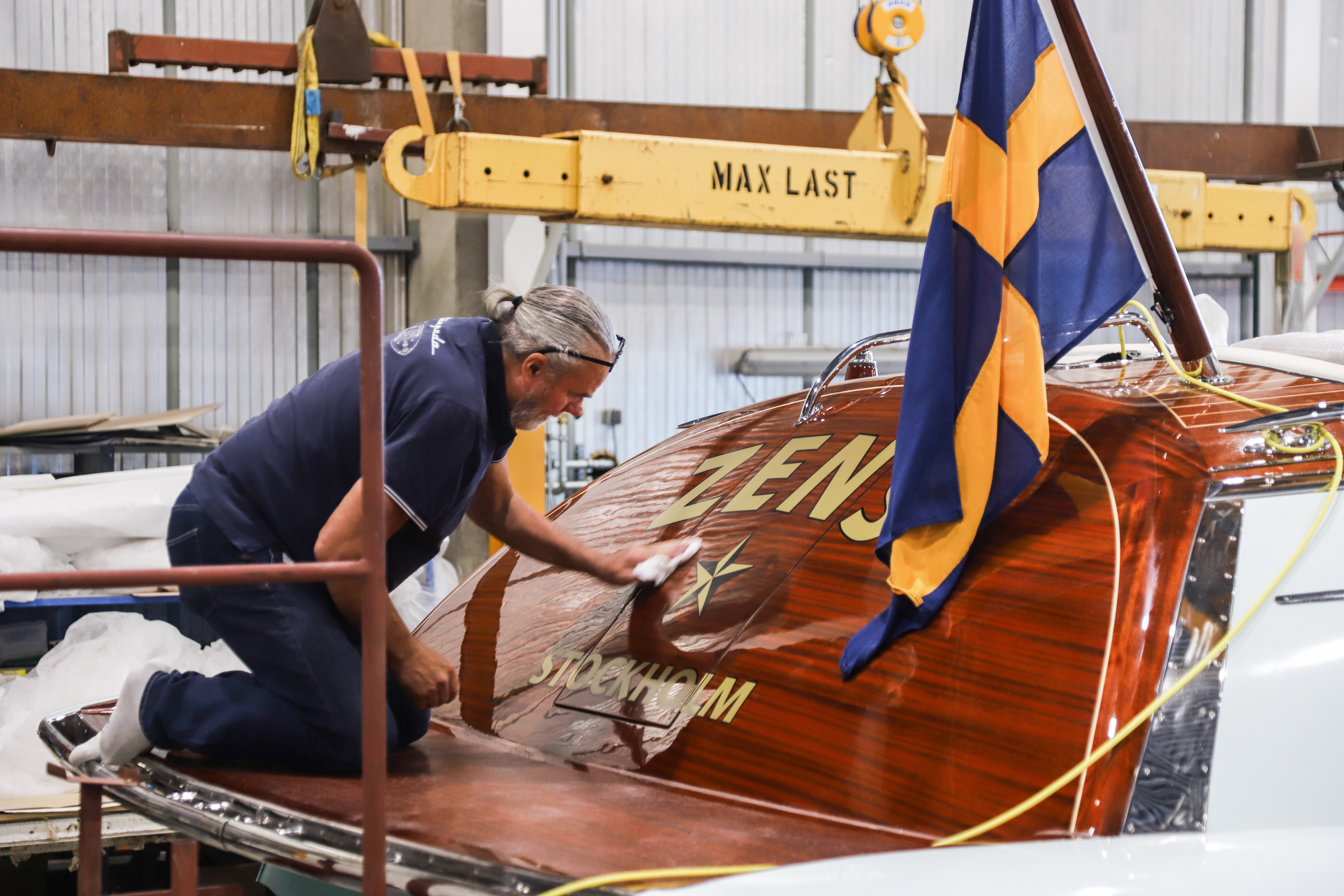
This matters because maintenance should be understood as ownership economics, not as a vague anxiety. A full refit typically represents around 1,000 manual hours for the deck, with a similar amount again for the cockpit. It is known work, accumulated over time and carried out when the owner wants the boat returned to that deep, newly built appearance.
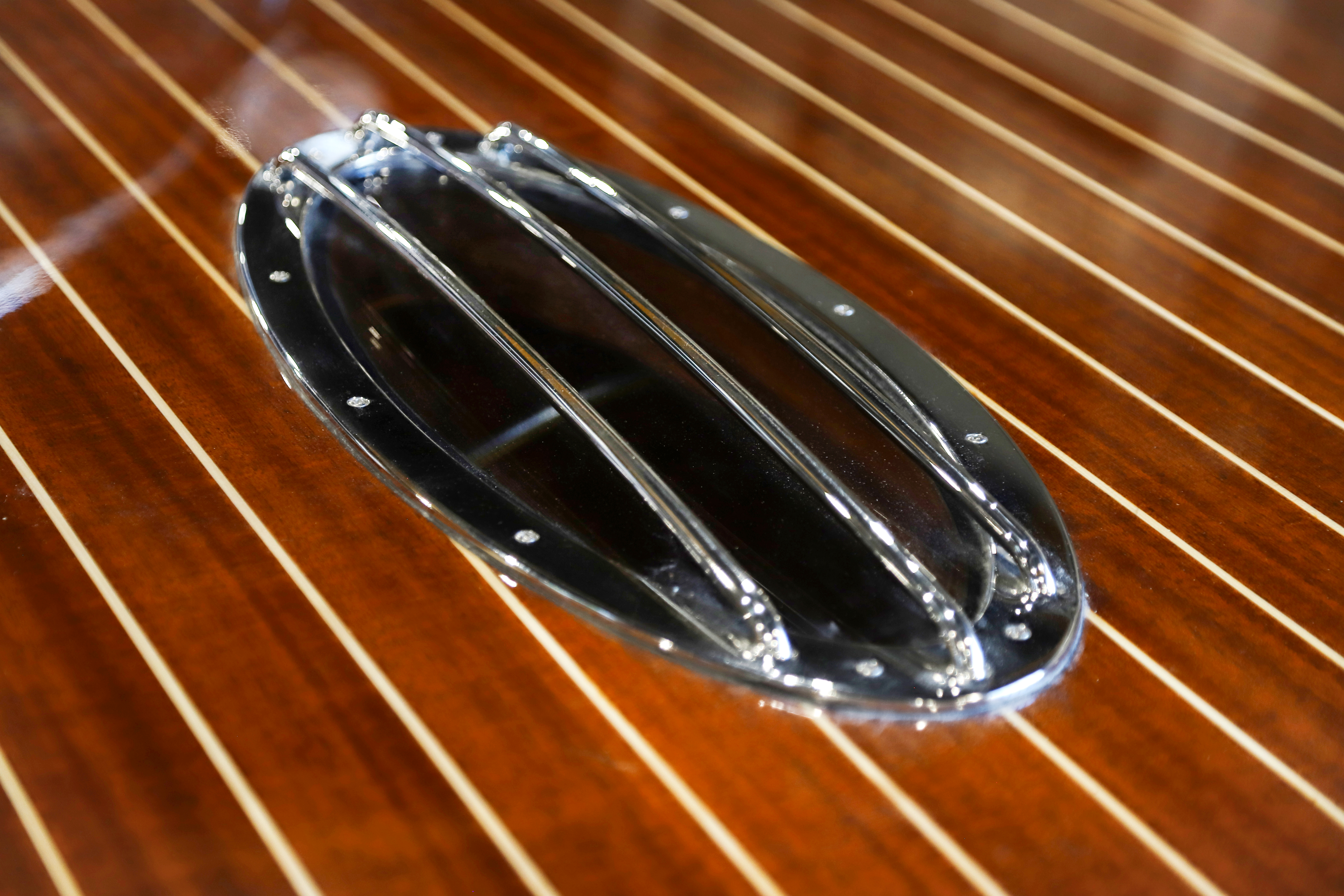
The work goes beyond the mahogany. It includes the visible metalwork that gives a Torpedo so much of her jewellery-like presence: the hand-cast and hand-polished front windscreen, the jackstaff, the cleats and the other stainless details that J Craft makes itself. In the workshop we call these pieces the "bling", playfully, but the work behind them is serious. Apart from flat steel bought from ThyssenKrupp in Germany, much of this stainless character is created, finished, restored and refitted by J Craft's own hands.
The wider cost of operating the boat deserves its own journal post rather than being compressed into this piece, which was written specifically to address the maintenance question, or as we call it, the maintenance myth.
There is no single ownership model. Some owners run as owner-operators. Some use occasional crew support. Others run the boat with a permanent captain. Some Torpedoes are operated as day boats, some as chase boats and tenders to larger vessels. Those choices change annual operating costs materially, so any honest discussion has to separate fixed operating costs from usage-led operating costs, crew choices and the planned 7-8 year maintenance fund.
Fixed operating costs are more predictable: winterisation, insurance, and engine and generator servicing. Usage-led operating costs vary significantly, as one would expect, depending on where she is kept, how she is used, who runs her and how many hours she does each season.
Berthing, fuel and crew depend on where the boat lives, how much use she gets and how the owner wants to use her. Keeping a Torpedo in Beaulieu-sur-Mer is a different cost case from keeping one in the heart of Monaco. An owner-operator model is different from a permanently crewed model. Fifty engine hours a year is different from 200 or more. The mistake is to fold all of that into the idle assumption that a boat of this kind simply costs 10 per cent of her new-build value every year in "maintenance". Plainly put, that is just wrong.
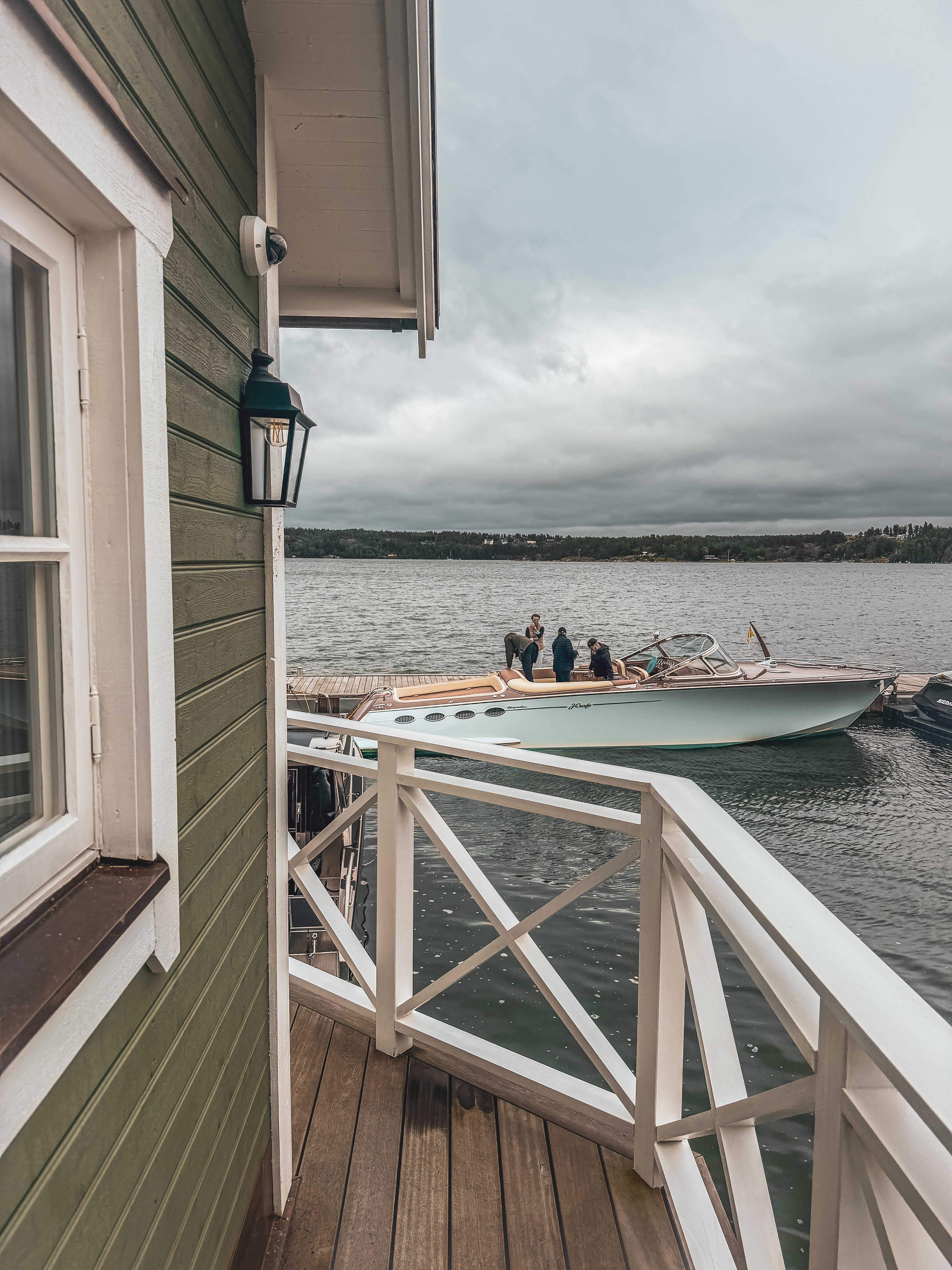
There is another side to the crewed model, too. If an owner chooses to run with a fixed captain, the Torpedo can also become a charter asset. In the South of France, that means a boat with genuine demand from private charter clients, corporate brands that want to use her as a platform for advertising or promotions, and film or campaign work where the Torpedo's visual identity is part of the attraction. In that model, the boat can earn towards her own keep. But that broader operating-cost picture deserves its own dedicated journal post.
For the maintenance question, the useful point is narrower and clearer. With our J Craft owned and operated Torpedo, Natalia, which we use frequently across a six-month season every year, and broadly in line with what we see across the Torpedo fleet, we provision for around Euro 15k per year and put that aside into her maintenance fund. That fund is then used for a complete refit every 7-8 years as described above. It amounts to around 0.75 per cent of the average new-build value of a Torpedo per year for maintenance in the proper sense of the word.
The useful difference is between an assumed annual maintenance myth and a known pattern of care: a physical boat, a known refit process, and a planned fund for the moment when the owner chooses to return the boat to her deep, freshly built appearance.
The owner does not have to trade beauty for practicality. The more useful question is where each material belongs. Wood belongs where it can be seen, touched and felt. Composite belongs where movement, moisture, impact, precision and longevity matter most. A Torpedo works because it refuses to confuse the two.
Johan Hallen, J Craft's master builder, has spent his working life at this intersection of tradition and engineering. He was there at the beginning, when Bjorn Janson set out to create a boat with the glamour of a classic wooden motorboat but the capability and usability of something far more modern. That founding instinct still defines the company. Preserve the soul. Improve the reality.
On Gotland, this way of thinking is not especially abstract. The island has a long memory of boats that had to work, not merely impress. The Baltic does not reward sentimentality. A boat may be beautiful, but in the Swedish sense it must also be strong, predictable and honest in bad weather. J Craft's Swedishness is found in that insistence: form and function are part and parcel of the same equation.
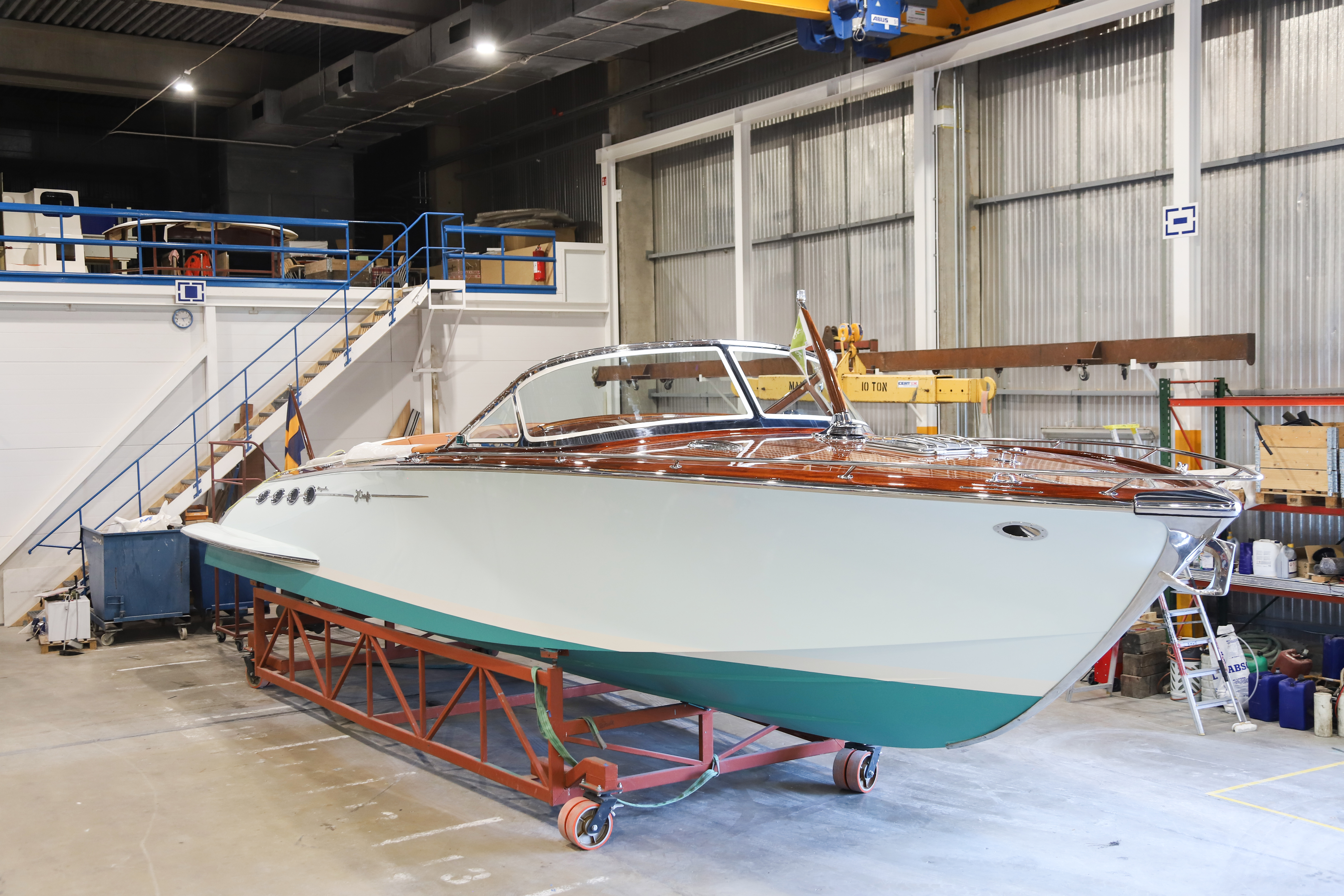
The same logic explains why each Torpedo is still built slowly. Between 8,000 and 10,000 manual hours go into a single boat. Much of that labour is visible in the finish, the joinery, the upholstery, the metalwork and the small details that owners notice over time. Much of it is also hidden. It lives in the accuracy of the fibreglass hull and deck, which, just like the joinery, upholstery and metalwork, is created by us as we build each Torpedo from the keel up in our shipyard in Visby. This is shown in the way systems are integrated, the way parts are fitted, tested and signed off by the people who made them.
There is a quiet confidence in that. The Torpedo does not prove her craftsmanship by making ownership more demanding. Quite the opposite. Much of the craft is there to remove demands from the owner.
That can feel counterintuitive in the world of traditional boats, where care and authenticity are often treated as inseparable. But intelligent craft has never been about preserving inconvenience. A well-made object should not ask to be forgiven for being beautiful. It should become easier to live with because it has been thought through and created properly.
It is also why the sustainability argument is practical rather than rhetorical. A boat that lasts is already making a claim about responsibility. A structure that resists moisture, holds its geometry and can be maintained without constant intervention is a better use of material and labour. J Craft's current composite process uses vacuum infusion and recyclable core material, while the visible mahogany is responsibly cultivated and used where its contribution is irreplaceable.
None of this removes the owner's relationship with the boat. It makes that relationship easier to enjoy.
A Torpedo still asks for care, as anything worth owning does. Varnish should be respected. Wood should be looked after. The boat should be cleaned, covered, sprayed down after use, dried where sensible, serviced and maintained by people who understand what she is. But it does not mean inheriting the anxieties of a traditional wooden hull. The maintenance belongs to stewardship, not survival.
That difference matters.
There is a real difference between caring for a boat and worrying about it. A Torpedo still wants proper care, but she should not make the owner feel that one missed weekend or one hard season has put the whole thing at risk. J Craft's material philosophy is designed to keep the owner firmly in the first category.
You could call the Torpedo a classic boat made modern. She is closer to a modern boat with a classic soul, built by people who know which parts of the past deserve to be carried forward and which parts should be quietly improved.
The mahogany is still there because nothing else gives the boat quite the same warmth.
The fibreglass is there because the boat also has to be used, looked after and trusted.
Together, they create the unusual calm at the centre of a Torpedo: the feeling that one can have the glamour, warmth and ceremony of a classic runabout without turning ownership into an act of devotion.
The beauty stays. The worry is lighter.
And perhaps that is the real luxury: to own something rare, handmade and lovely, and to use it often, confidently and without resentment. To leave harbour because the weather is good and the afternoon has opened up. To come back with salt on the deck and not a knot in the stomach. To know that the boat has been built to be admired at rest and lived with, season after season.
Beauty remains. The burden changes.
Mahogany may be the part people notice first.
But the truth of the Torpedo lies underneath: a Swedish refusal to let romance become fragility.