Blog
Tender Boat Meaning: Yacht Tenders, Chase Boats and the Modern Luxury Tender
A tender boat is a support vessel used by a larger yacht. In its simplest form, it moves guests, crew, luggage and supplies between yacht and shore. It gives the main yacht access to harbours, beaches, restaurants, coves and anchorages the larger vessel may not be able to reach directly.
Published June 18, 2026
Updated July 2, 2026
Words by: J Craft
A tender boat is a support vessel used by a larger yacht. In its simplest form, it moves guests, crew, luggage and supplies between yacht and shore. It gives the main yacht access to harbours, beaches, restaurants, coves and anchorages the larger vessel may not be able to reach directly.
That is the practical answer. But at the luxury end of the market, a tender boat is rarely just transport. It is often the first part of the yacht experience a guest touches, the boat that carries people from privacy to shore and back again, and the vessel that decides whether movement around the yacht feels graceful or awkward.
For anyone asking what is a tender on a boat, the clearest answer is this: it is the smaller boat that lets the larger yacht function more freely. A tender may be technically auxiliary, but in day-to-day use it often determines how comfortably and spontaneously the yacht can be used.
A chase boat takes that idea further. Instead of simply shuttling between yacht and shore, a chase boat can run independently, carry additional guests or equipment, follow the main yacht, or allow the mother ship to stay at anchor while life continues around it.
The J Craft Torpedo sits naturally in this world. The 42-foot Torpedo has been described by SuperYacht Times as a fast runabout with retro styling that also serves as a superyacht tender or chase boat. But it should not be understood only as support craft. Its role is more interesting than that: a yacht tender with the beauty, range and presence to be chosen as a day boat in its own right.
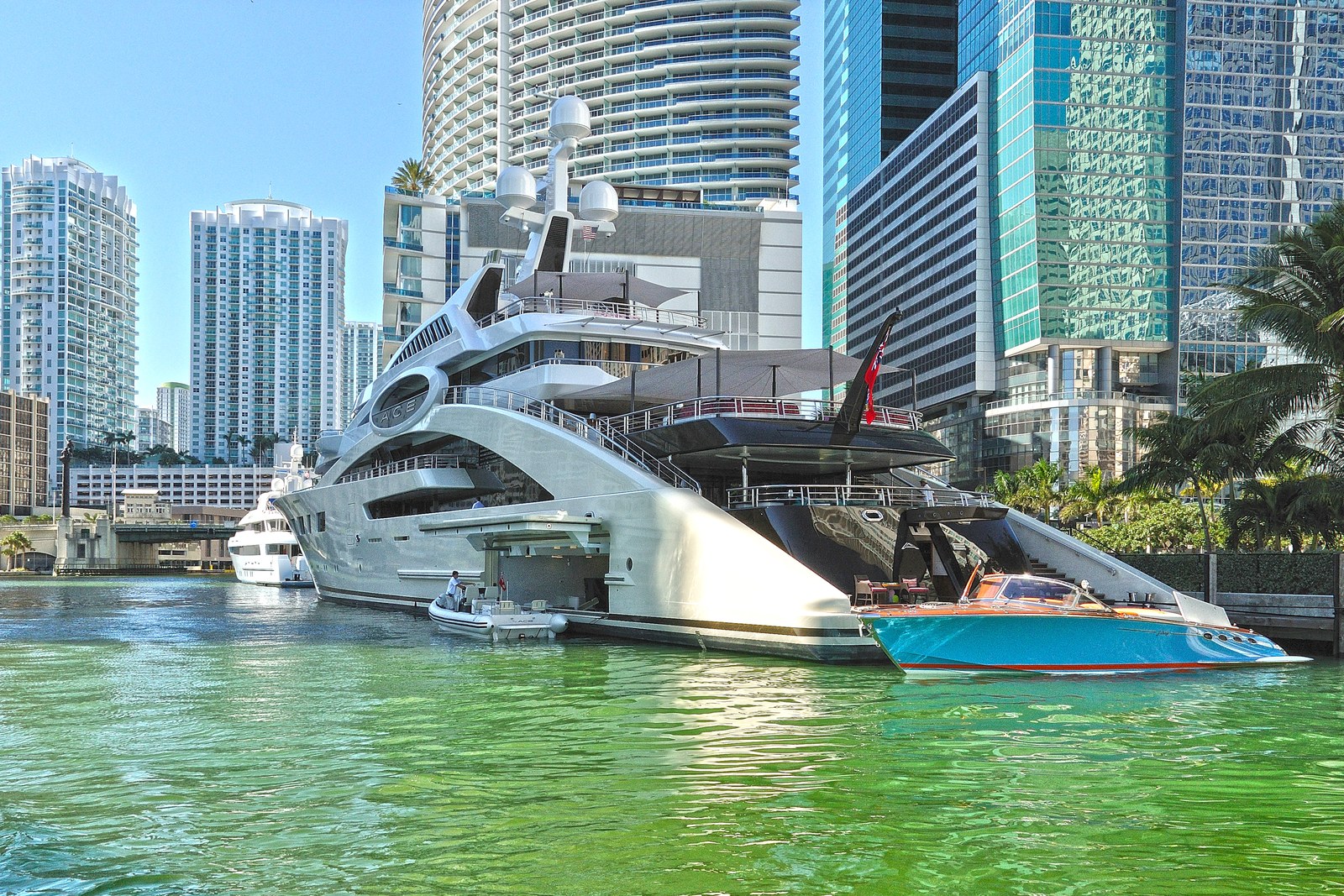
Table of Contents
1. What Is a Tender Boat?
2. What Is a Yacht Tender Used For?
3. What Is a Chase Boat?
4. Tender Boat vs Chase Boat: The Practical Difference
5. What Makes a Good Superyacht Tender?
6. Why Range, Comfort and Open-Water Confidence Matter
7. When a Tender Becomes More Than a Tender
8. Where the Torpedo Has Already Served as a Tender and Chase Boat
9. Where the J Craft Torpedo Fits
10. Frequently Asked Questions
1. What Is a Tender Boat?
A tender boat is a support vessel used by a larger boat or yacht. If someone asks, "what is a tender boat?", the simplest answer is that it is the boat used to move people, supplies and equipment between the main vessel and the places around it.
That might mean carrying guests from an anchorage to shore. It might mean taking luggage ahead to a hotel, bringing provisions back to the yacht, collecting crew, moving children and friends to a beach, or running into harbour while the main yacht remains outside.
On smaller cruising boats, a tender might be a simple inflatable dinghy. On a superyacht, the tender can be a highly specialised vessel in its own right: a limousine tender, RIB, landing craft, watersports tender, beachlander, classic launch or fast day boat.
This is why the phrase `tender boat` covers such a wide range. It can describe a small utilitarian craft, but it can also describe a carefully designed luxury vessel that carries the tone of the whole yacht programme. The difference is not only price or size. It is expectation.
At the top end, a tender is not merely "the little boat beside the big boat". It is the boat that makes the big boat usable.
2. What Is a Yacht Tender Used For?
A yacht tender is used for movement, access and independence. A yacht may be the centre of the experience, but it is rarely the vessel that does every small job itself.
Common yacht tender duties include:
- moving guests between yacht and shore;
- transporting luggage, provisions and crew;
- taking guests to restaurants, beach clubs, private beaches or nearby harbours;
- exploring shallow anchorages or smaller bays;
- collecting friends or family without repositioning the main yacht;
- supporting watersports or swimming stops;
- allowing the mother ship to stay at anchor while people move freely around it.
In practical terms, the tender shapes the rhythm of life around the yacht. If it is uncomfortable, exposed, hard to board or underpowered, every transfer becomes a small friction. If it is capable, elegant and easy to use, the yacht feels larger, freer and more relaxed.
This matters even more when the yacht is anchored away from port. A beautiful anchorage is only as convenient as the boat that connects it to land.
That is why serious yacht tenders are not judged only by whether they fit in a garage. They are judged by whether people actually enjoy using them.
3. What Is a Chase Boat?
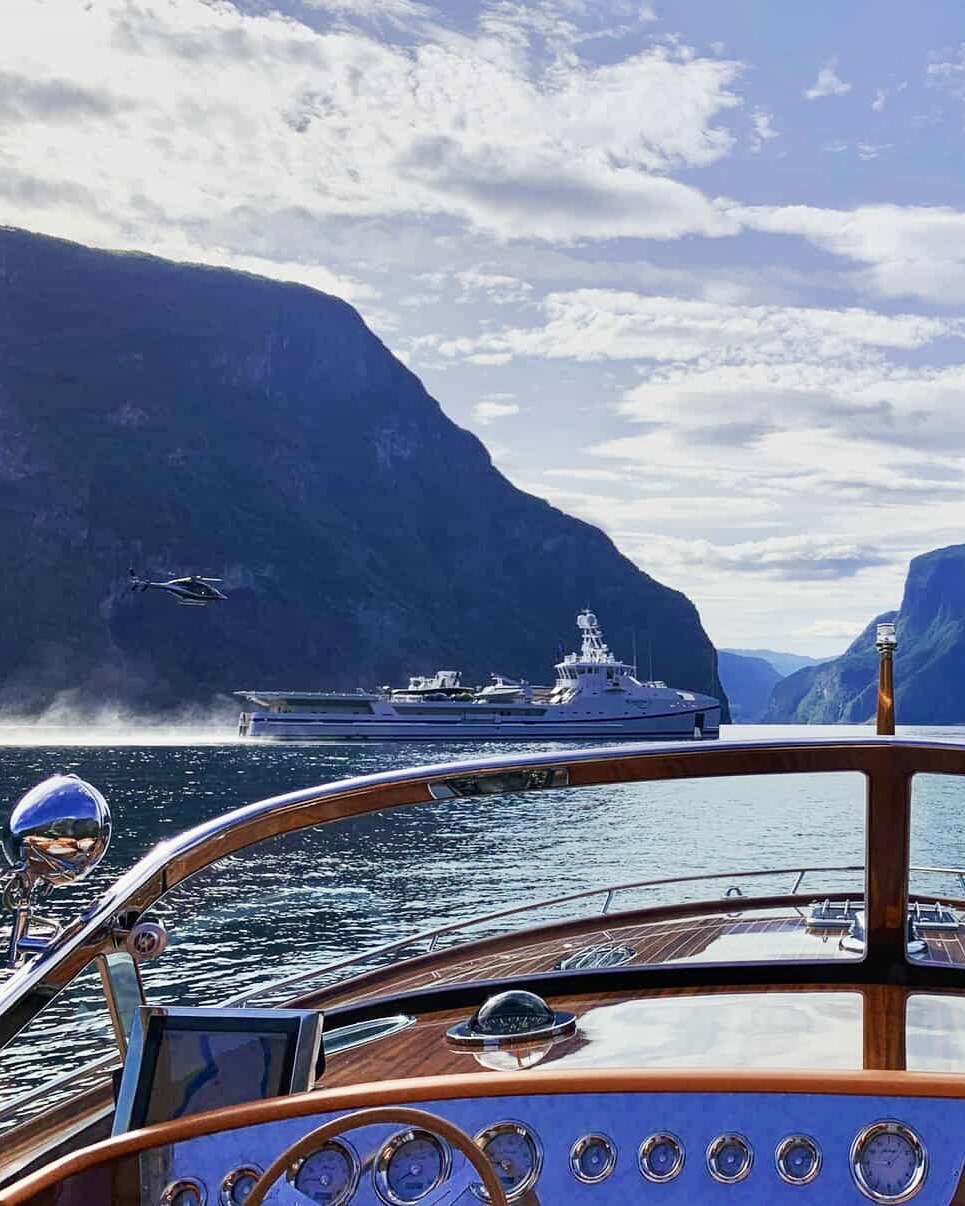
A chase boat is a support boat that operates more independently than a conventional yacht tender. It may follow the main yacht, carry additional equipment, transport guests separately, scout anchorages, or take on duties that would otherwise clutter the mother ship.
The term is common in superyacht use because very large yachts often have more operational needs than one small tender can handle. A chase boat can add flexibility without compromising the main yacht's layout, deck space or aesthetic.
In practice, a chase boat may be used for:
- carrying luggage and provisions;
- moving crew or guests separately;
- supporting water toys and equipment;
- making fast local runs;
- allowing the yacht to remain at anchor;
- providing a more informal day-boat experience away from the mother ship.
The best chase boats therefore need more than short-range practicality. They need speed, range, comfort, handling and the ability to operate confidently in real conditions. They must make sense to the captain and still be something the owner wants to step aboard.
4. Tender Boat vs Chase Boat: The Practical Difference
The difference between a tender boat and a chase boat is not always rigid. In the real world, the same vessel may serve both roles.
A tender boat is usually thought of as the yacht's transfer vessel. Its core job is yacht-to-shore movement: guests, crew, bags, beach runs, harbour access and short-distance convenience. It is closely tied to the yacht's daily operation.
A chase boat is usually more independent. It may run longer distances, carry more people or equipment, follow the main yacht, or allow a separate programme to happen alongside the yacht. It can support the yacht without needing to be physically tethered to it.
The difference is partly one of expectation.
A tender must be convenient. A chase boat must be capable.
A tender must make arrivals easy. A chase boat must make movement flexible.
A tender often solves immediate access. A chase boat expands what the yacht can do.
For a small tender, that distinction matters. For a larger and more capable luxury tender, the categories can overlap. A 40-foot or 42-foot boat with serious range, comfort, speed and handling can move guests ashore in style, then spend the rest of the day acting as an independent coastal boat.
That is where the category begins to matter.
5. What Makes a Good Superyacht Tender?
A good superyacht tender has to satisfy two audiences at once: the people operating it and the people riding in it.
For the captain and crew, the questions are practical. Is it reliable? Is it easy to handle in tight spaces? Can it carry guests safely? Is boarding straightforward? Can it deal with chop, wash and changing weather? Is it serviceable? Does it fit the yacht's operational needs?
For the owner and guests, the questions are different. Is it comfortable? Is it dry? Does it feel special? Is there room to sit properly? Does it make a trip ashore feel like part of the pleasure rather than a chore?
The best superyacht tenders tend to share several qualities:
- confident handling at low speed and underway;
- enough range for real coastal use;
- a hull that can deal with imperfect conditions, including serious open-water chop;
- guest comfort, not just passenger capacity;
- easy boarding and movement;
- room for luggage without making guests feel crowded;
- visual presence appropriate to the yacht it serves;
- a sense of occasion.
The last point is not decorative. In yachting, arrival matters. The tender is often what people see before they see the yacht. It is also what guests remember because it is the part of the programme they physically enter and step out of.
That is why a tender can be technically secondary and emotionally central at the same time.
For a tender intended to serve serious yachts, comfort is not a soft requirement. Guests should remain dry, composed and properly supported even when the water is not flat. In the Torpedo's case, that confidence comes from a deep-V hull and a build philosophy formed in demanding northern waters, with J Craft references to conditions up to 4-metre waves. That does not make every transfer a rough-water exercise, but it explains why sea-keeping belongs in the same conversation as leather, lacquer and arrival.
6. Why Range, Comfort and Open-Water Confidence Matter
Many tenders are perfectly adequate inside a harbour. Fewer are persuasive when the plan changes, the anchorage moves, the sea state is less polite, or the owner wants to go somewhere rather than simply be transferred.
Range matters because it changes the map. A tender with real range can turn a yacht into a hub rather than a fixed point. It can make a coastal lunch, an island hop or a spontaneous shore run feel normal rather than ambitious.
Comfort matters because guests remember transfers physically. A fast but uncomfortable boat becomes something to endure. A tender with proper seating, protection, space and composure becomes part of the day.
Open-water confidence matters because the sea rarely behaves like a brochure. A tender that only feels good in flat water limits the yacht's freedom. A boat that can handle real conditions gives the owner and captain more options.
This is where the J Craft Torpedo's specification becomes relevant to the tender conversation. The Torpedo is a 42-foot boat with a 300nm range at a cruise speed of 30 knots and a top speed of 47 knots, which is in excess of 50 mph. It has Volvo Penta IPS joystick handling and certification to carry 12 people. Depending on specification, it can also be configured as a fully covered, heated or air-conditioned two-cabin set-up, with sleeping space for up to 6 or 7 guests across the main cabin, technical or crew compartment and covered cockpit. The cockpit can be enclosed beneath the Bimini, while the table arrangement can be converted for galley, dining or sleeping use.
Those figures matter because they move the boat beyond short transfer duty. A vessel with that range, speed and guest capacity can serve around a yacht, but it can also run independently as a serious luxury day boat.
Modern independence is not only about speed. The Torpedo's wider technical package can include equipment such as Seakeeper gyroscopic stabilisation, Starlink connectivity and Garmin wearable integration, all of which support the same idea: a chase boat should be able to operate away from the mother ship without feeling isolated or exposed.
The Torpedo's story repeatedly returns to this idea of distance. Examples cited across J Craft and press material include Saint-Tropez to Corsica, Ibiza to Sardinia, Miami to The Bahamas, Hong Kong to Hainan, Saint-Tropez to Monaco to Portofino, Greenwich to Nantucket, Sag Harbor to Martha's Vineyard and Palm Beach to New Providence.
These are not tender-garage movements. They are the kind of routes that explain why the tender and chase boat categories can overlap when the boat is capable enough.
7. When a Tender Becomes More Than a Tender
There is a reason classic yacht tenders occupy such a strong place in the imagination of yachting. They are not only practical. They carry the grace of movement.
In the J Craft Journal piece `Tender is the Heart`, the classic yacht tender is framed as central to the grace and emotional image of the yachting lifestyle. The point is that a tender can express the feeling of the yacht before anyone has stepped aboard the yacht itself.
Modern superyacht tenders can be sleek electric limousines, hard-working RIBs, beachlanders, watersports platforms or high-powered support boats. Each has its place. But the classic yacht tender occupies a different emotional register.
That is why beauty is not irrelevant in a tender. It is part of the function.
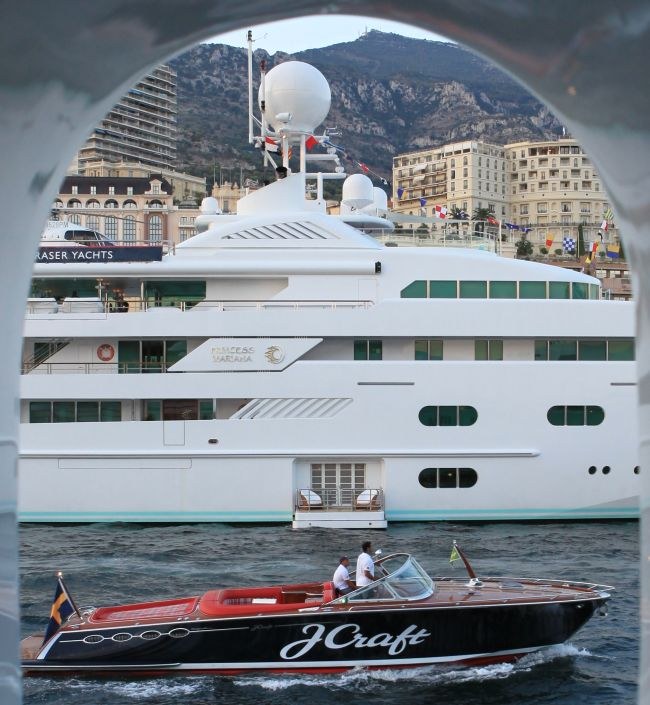
A tender that looks wrong beside the yacht weakens the composition. A tender that is uncomfortable weakens the day. A tender that cannot handle the conditions weakens the plan. But a tender that is beautiful, comfortable and capable can become one of the most used parts of ownership.
J Craft's own language around this is deliberately Swedish rather than decorative. The Torpedo is built on Gotland and has been described through the idea of being made OF Sweden, not merely made in Sweden: shaped by an island culture of weather, seamanship and practical resilience. That is the substance behind phrases such as Viking DNA and military-grade toughness. The boat is polished, but the point of the polish is not fragility.
The hours matter here too. A Torpedo is hand-built over roughly 8,000 to 10,000 man-hours, depending on specification. In tender terms, that changes the emotional status of the boat. It is no longer simply a support craft ordered to match a larger yacht. It becomes an object with its own workmanship, memory and value.
This is especially true when the tender is large and capable enough to become an independent boat. At that point, the owner is buying a second way to experience the water.
8. Where the Torpedo Has Already Served as a Tender and Chase Boat
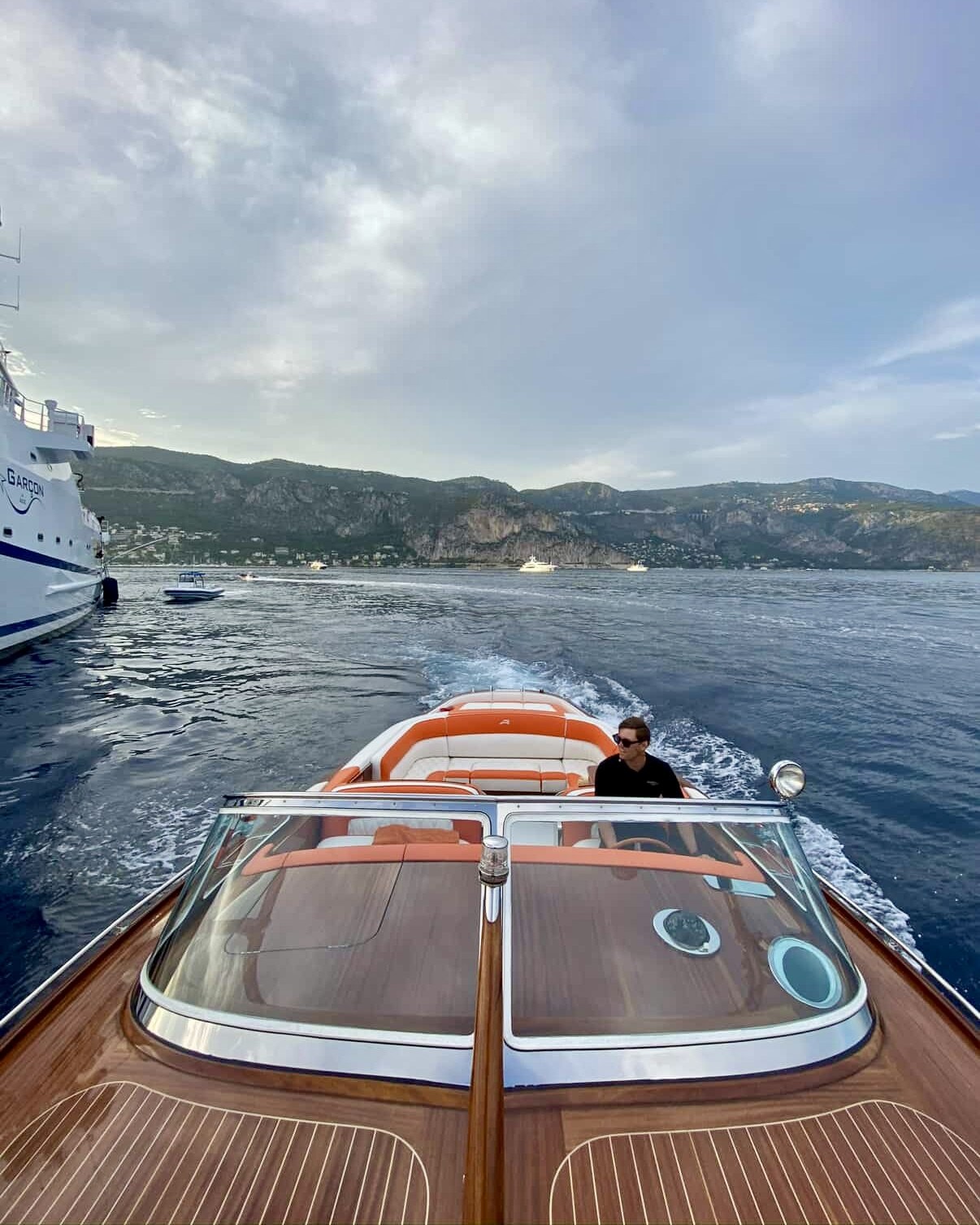
The J Craft Torpedo fits the tender and chase boat conversation because it has already served in that world. SuperYacht Times describes the 42-foot Torpedo as a fast runabout with retro styling that also serves as a superyacht tender or chase boat. The Ace programme gives the practical proof: Torpedo Natalia worked in that role and was carried by Garcon, the fleet's support vessel.
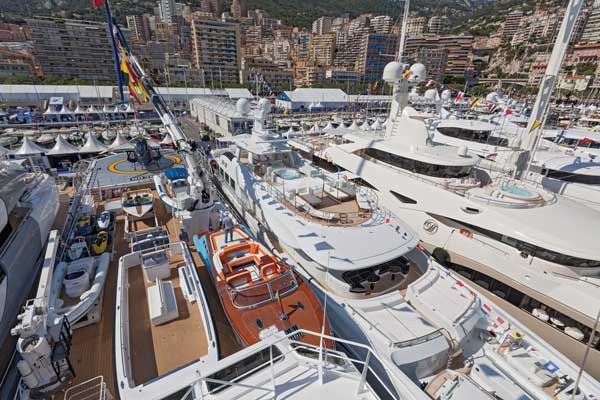
That is not a casual reference. A tender working around a yacht such as Ace has to do more than arrive beautifully. It has to move guests, crew and luggage with calm precision, make boarding feel natural, and remain credible in the everyday rhythm of a serious yacht programme.
The Ace programme also shows why a large tender can be more versatile than it first appears. Torpedo Natalia was lifted by a single lifting point onto and off Garcon, the fleet's support vessel for Ace. This is not important merely as a handling detail, or merely because a fully loaded Torpedo weighs close to 10 metric tons. It is important because lifting that weight through one certified point visibly demonstrates the structural integrity of J Craft's own-built hull and deck. The toughness is not a phrase added to the boat after the fact. It is a capability designed into the structure.
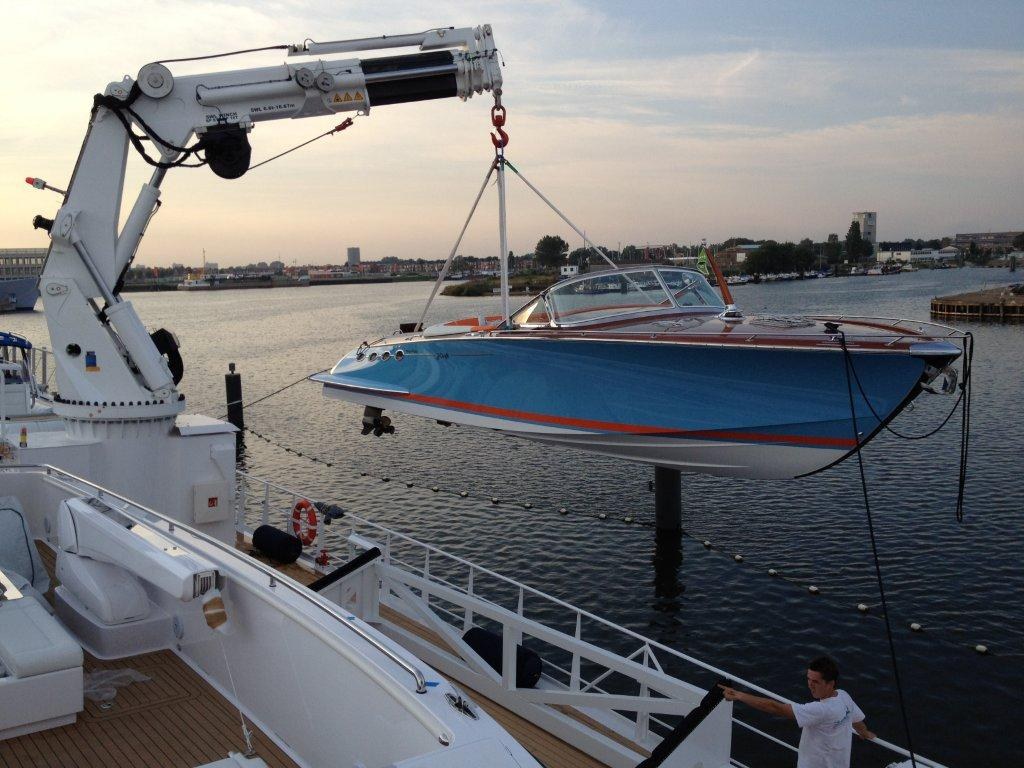
For modern superyacht use, that versatility is a real distinction. Natalia can be carried for long crossings, such as an Atlantic passage, and then used as a chase boat on shorter runs, such as Monaco to Saint-Tropez or Fort Lauderdale to Bimini. In other words, the same boat can travel with the yacht when distance demands it, then operate independently when the programme becomes local. Many tenders can do one of those jobs well. Far fewer can credibly do both.
The lifting certification adds another layer. The point is not only that the Torpedo can be lifted from a single certified point, but that J Craft has built Torpedoes with certification allowing them to be lifted with crew inside the vessel. Certification of this kind is difficult to obtain because it demands more than a beautiful finish or a strong-looking hull. It requires the builder to understand the loads, reinforcements, structure and operational reality involved when a substantial tender is lifted on and off a yacht with people aboard. That is precisely the point: J Craft is building to a level of capability more commonly associated with military or professional specification than with the pleasure-yacht tender segment. Few boats in this category can make the same claim with the same credibility.
Bourik makes the point even more strongly. SuperYacht Times records Bourik as tender to 156-metre Dilbar. In this context, the Torpedo is not being used as a styling exercise or a nostalgic accessory. It is operating in the demanding world of very large yachts, where the support craft has to be dependable, comfortable, manoeuvrable and appropriate to the scale of the vessel it serves.
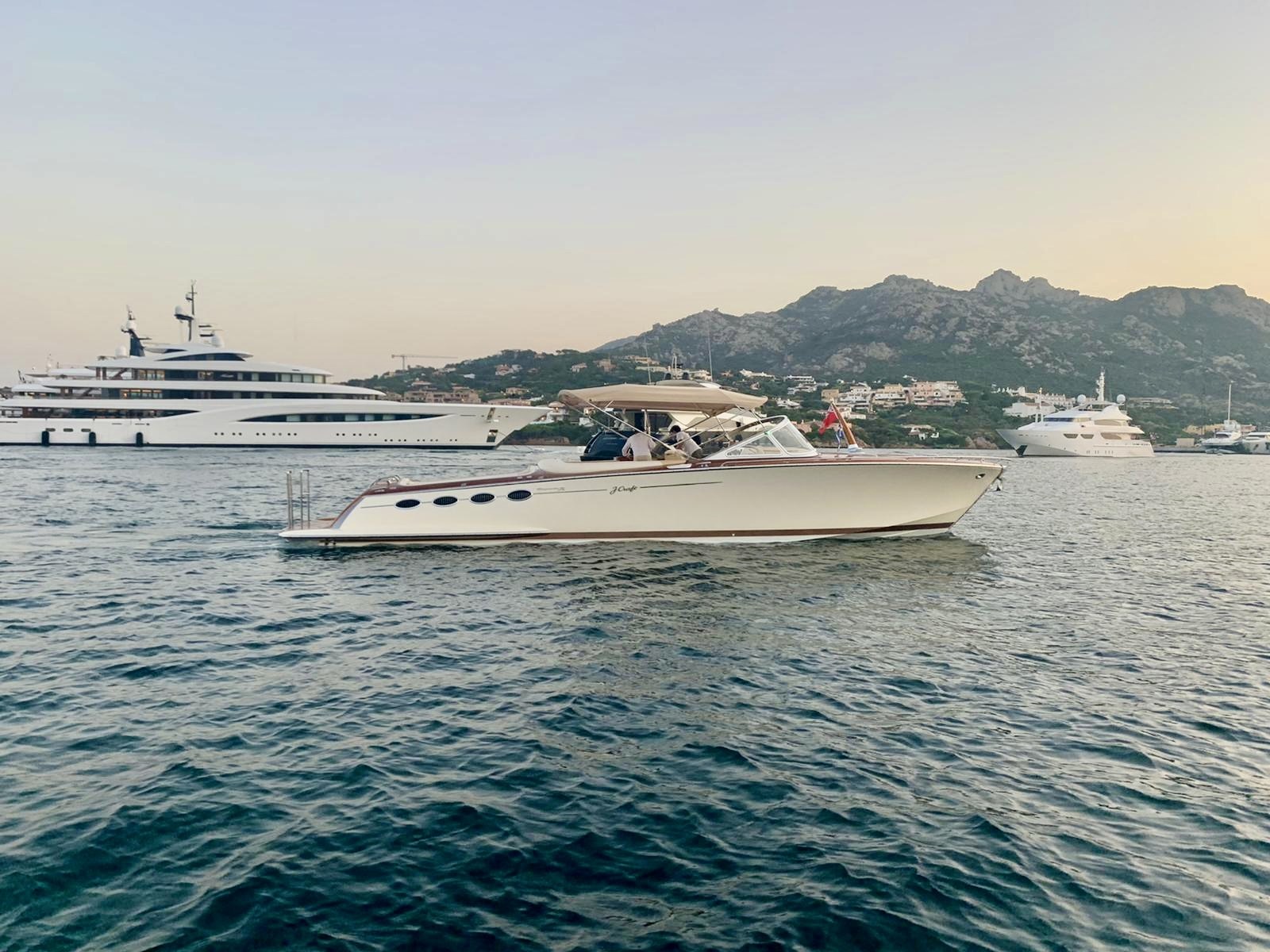
Torpedo Bambola also served as tender to Luna. The pattern continues with Tonic Express, the Torpedo that served as tender to Pink Gin. Separately, another Torpedo served around Wianmatta, the Nobiskrug formerly known as Siren. Marusya served around the 65-metre Codecasa Family Day.
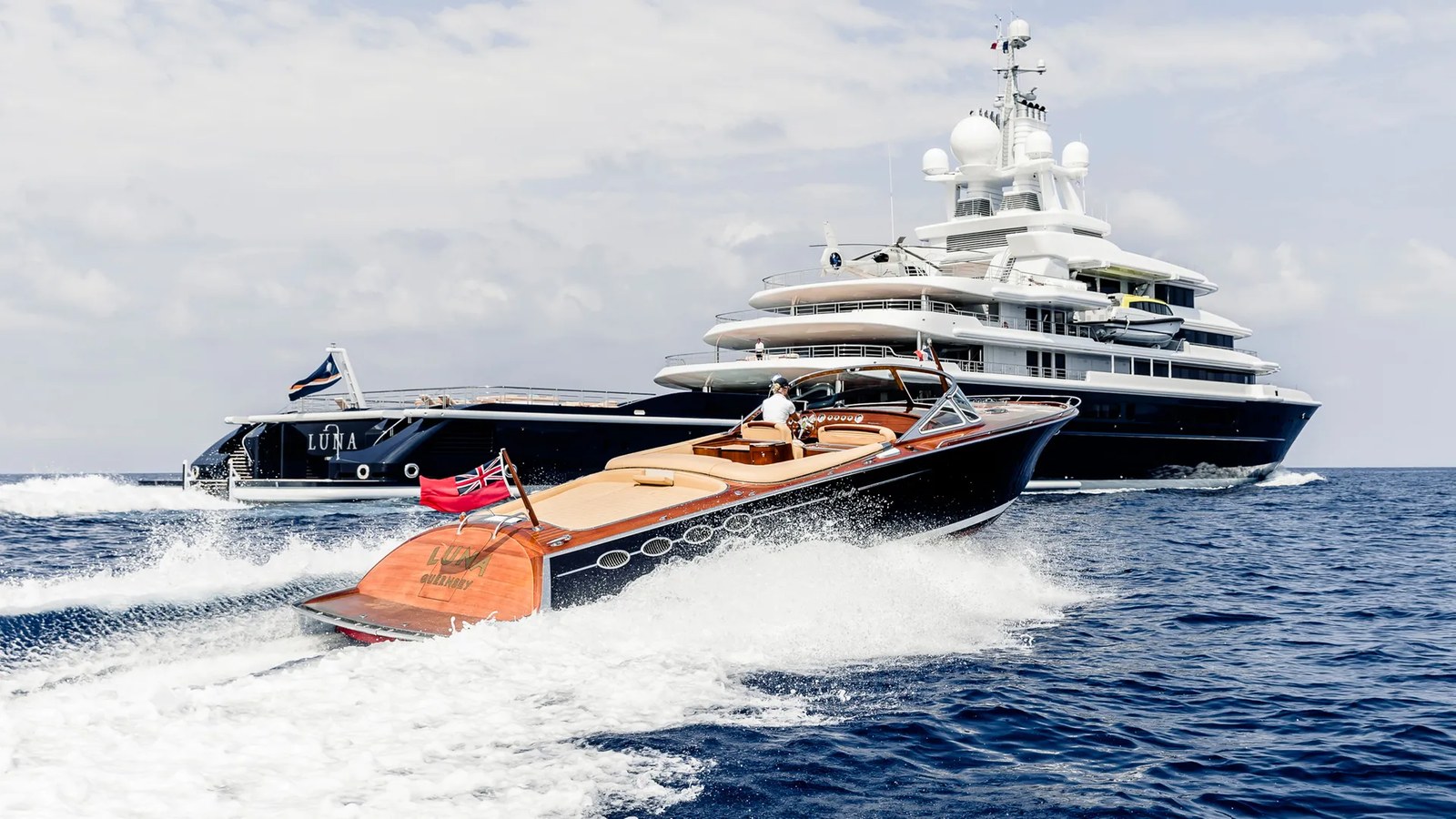
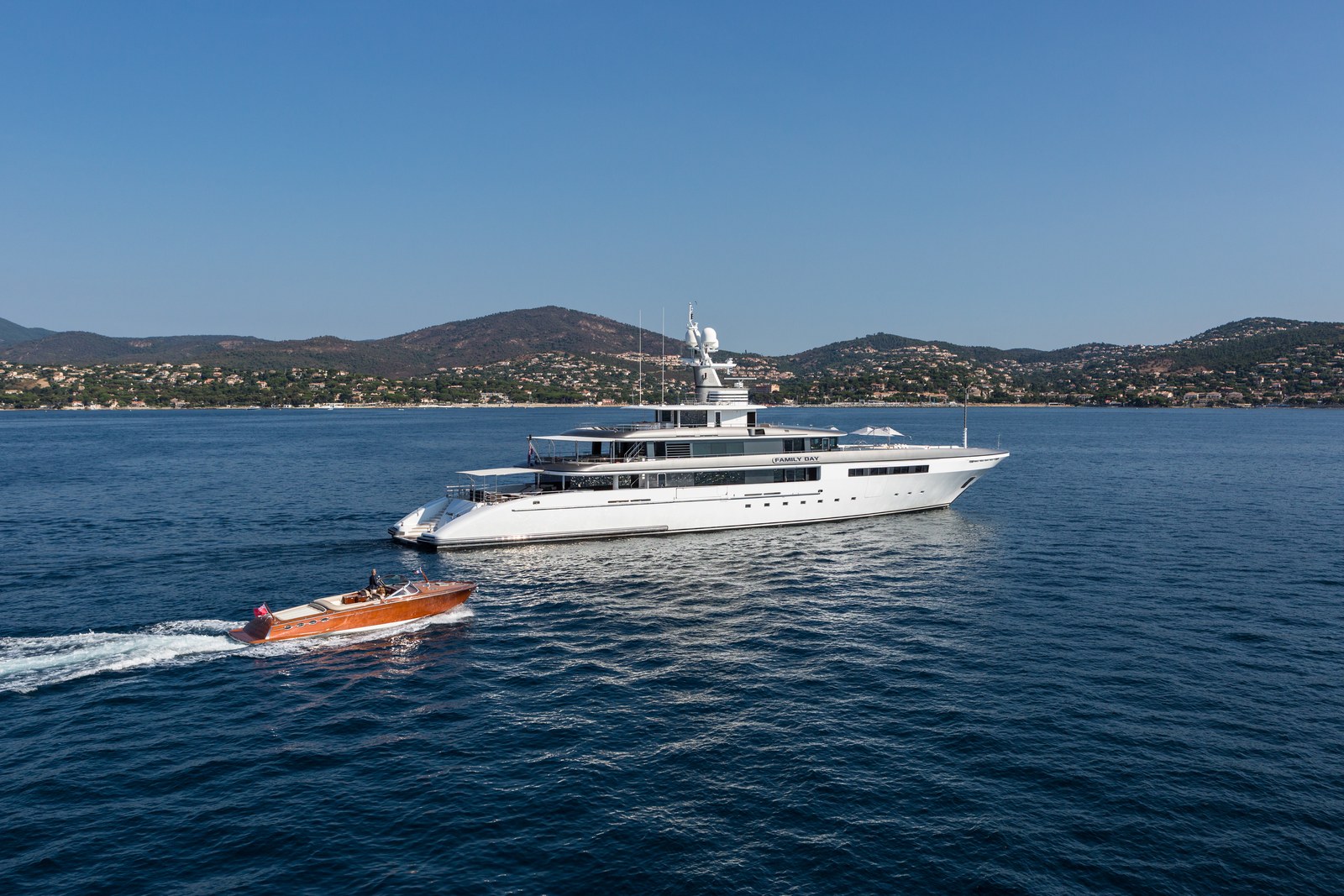
These examples matter because they turn the point from a one-off into a real pattern. Natalia, Bourik, Bambola, Tonic Express, Marusya and the Wianmatta Torpedo show the Torpedo in the tender and chase-boat role beside yachts whose operational standards are high and whose visual standards are higher still.
That is why the tender angle is not a marketing invention. It is part of the boat's real history. The Torpedo has already done the work that the category describes, while remaining something more interesting than support equipment.
9. Where the J Craft Torpedo Fits
But the more important point is that the Torpedo should not be reduced to tender status. Its value is precisely that it can serve the yacht without feeling like equipment.
The Torpedo began as the evolution of the Cabrio Cruiser into a more capable 42-foot boat built around Volvo Penta IPS pod drives. Radenko Milakovic has described wanting a boat that was fast and "leggy", able to cover long distances quickly, while still remaining a day boat rather than becoming a mini yacht.
That distinction is useful. The Torpedo is not trying to be a small yacht. It is trying to be a complete day boat with the range, comfort and confidence to support serious use.
Its size is part of that logic. Around 40 to 42 feet, a luxury tender can reach a useful middle ground: large enough for proper seating, luggage, speed, range, stability and occasional overnight use, but still compact enough to feel immediate and owner-operated rather than formal.
This is also why experienced surveyors have described the Torpedo as a superyacht in 12.63 metres, or 42 feet. That is not because the boat is trying to imitate a small yacht. It is because the build standards, structure, finish, systems, performance and operational capability sit above what is normally expected in the tender market. The conclusion is simple: the Torpedo is not just prettier than most tenders. It is built to a higher standard, with greater emphasis on quality, strength, performance and real-world capability.
As a tender, it can move guests beautifully. As a chase boat, it can operate independently. As a day boat, it can be used for lunch runs, island crossings, swimming days, coastal travel and nights aboard. As an object, it brings the emotional language of the classic yacht tender into a boat with modern performance and control.
That combination is rare because most tenders lean one way or the other. Some are pure utility. Some are pure style. Some are fast but harsh. Some are comfortable but limited.
The Torpedo's strength is that it does not need to choose only one role. It can sit beside a yacht, run ahead of it, or leave it behind for the day.
For someone searching `yacht tenders for sale`, that is the question worth asking. Do you need only a way to get from yacht to shore, or do you want a boat that changes what the yacht can do?
10. Frequently Asked Questions
What is a tender boat?
A tender boat is a smaller vessel used to support a larger yacht or boat. It usually carries guests, crew, luggage or supplies between the yacht and shore, though larger luxury tenders may also be used for independent day trips.
What is a tender on a boat?
A tender on a boat is the support craft connected to the main vessel. It allows the main boat or yacht to stay anchored while people and supplies move between yacht, shore, beaches, restaurants or nearby harbours.
What is the difference between a tender boat and a chase boat?
A tender boat is usually focused on yacht-to-shore transfers and short support duties. A chase boat is usually more independent, with greater emphasis on range, speed and flexible support around the yacht. In practice, a capable vessel can do both.
What makes a good superyacht tender?
A good superyacht tender should be easy to handle, comfortable for guests, safe in changing conditions, practical for luggage and crew movement, reliable, visually appropriate to the yacht, and capable enough to support how the owner actually uses the yacht.
Can a yacht tender also be a day boat?
Yes. Some larger luxury tenders can also serve as day boats, especially if they have enough range, seating, comfort and speed to be used independently. The J Craft Torpedo is an example of a boat that can serve tender or chase duties while also operating as an independent day boat.
How big is a typical yacht tender?
Yacht tenders vary widely. Small cruising boats may use compact inflatables, while large yachts and superyachts may use substantial custom tenders. For luxury tenders and chase boats, a 40 foot boat, or something in the 40 to 42-foot range, can be a sweet spot because it allows real guest capacity, range, stability and day-boat comfort without losing immediacy.
Explore the J Craft Torpedo
A tender boat begins as support. In the right hands, it becomes something more: a way to move with grace, to use the yacht more freely, and to make the distance between anchor and shore part of the experience.
The J Craft Torpedo was built for that broader role. Explore the Torpedo, view the gallery, or enquire about current build availability. For the emotional side of the classic yacht tender, read `Tender is the Heart`. For the Torpedo's lineage from Riva, Chris-Craft and Hacker-Craft, continue with `The Love Child of a Love Child`.