Journal #45
Amazon Queen: One Year, Five Waters, One Torpedo
Amazon Queen's first year across five waters shows how a J Craft Torpedo combines classic emotion, modern engineering and practical ownership.
Published September 10, 2026
Updated September 18, 2026
Words by: J Craft
There are boats that spend their first year settling into ownership. Amazon Queen has spent hers moving.
Since leaving J Craft's yard on Gotland, Fred Coyle's Torpedo has covered an unusually broad arc. She began in Swedish waters, continued through the Finnish archipelago, Denmark and Germany, and reached Greifswald before travelling south by road to St Tropez. From there she ran through the Mediterranean: the Porquerolles, Cannes, Nice, Monaco, Rapallo, Portofino, the Cinque Terre, and back to Monaco, where she appeared at Monaco Yacht Show after being invited to Monaco Classic Week.
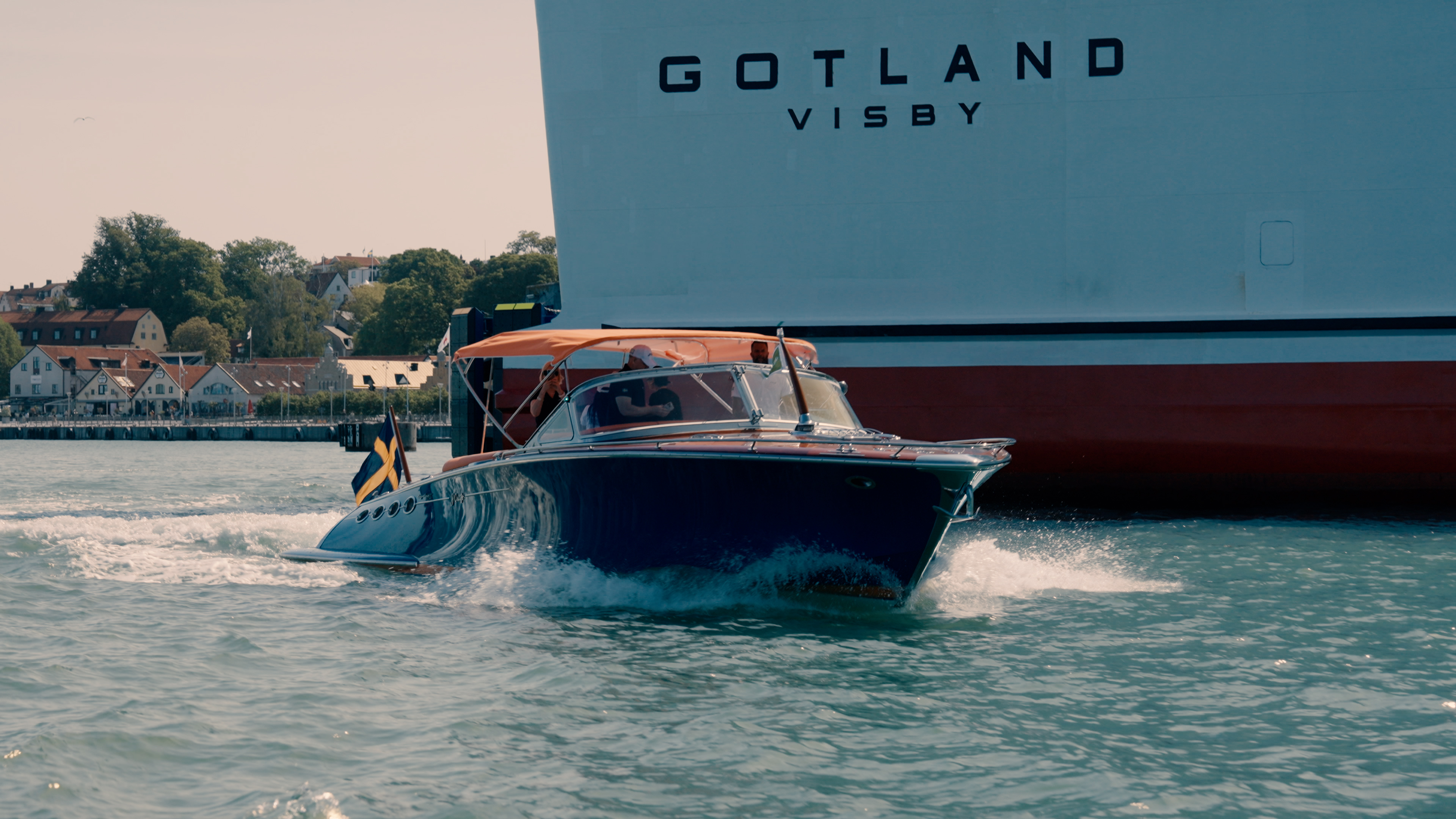
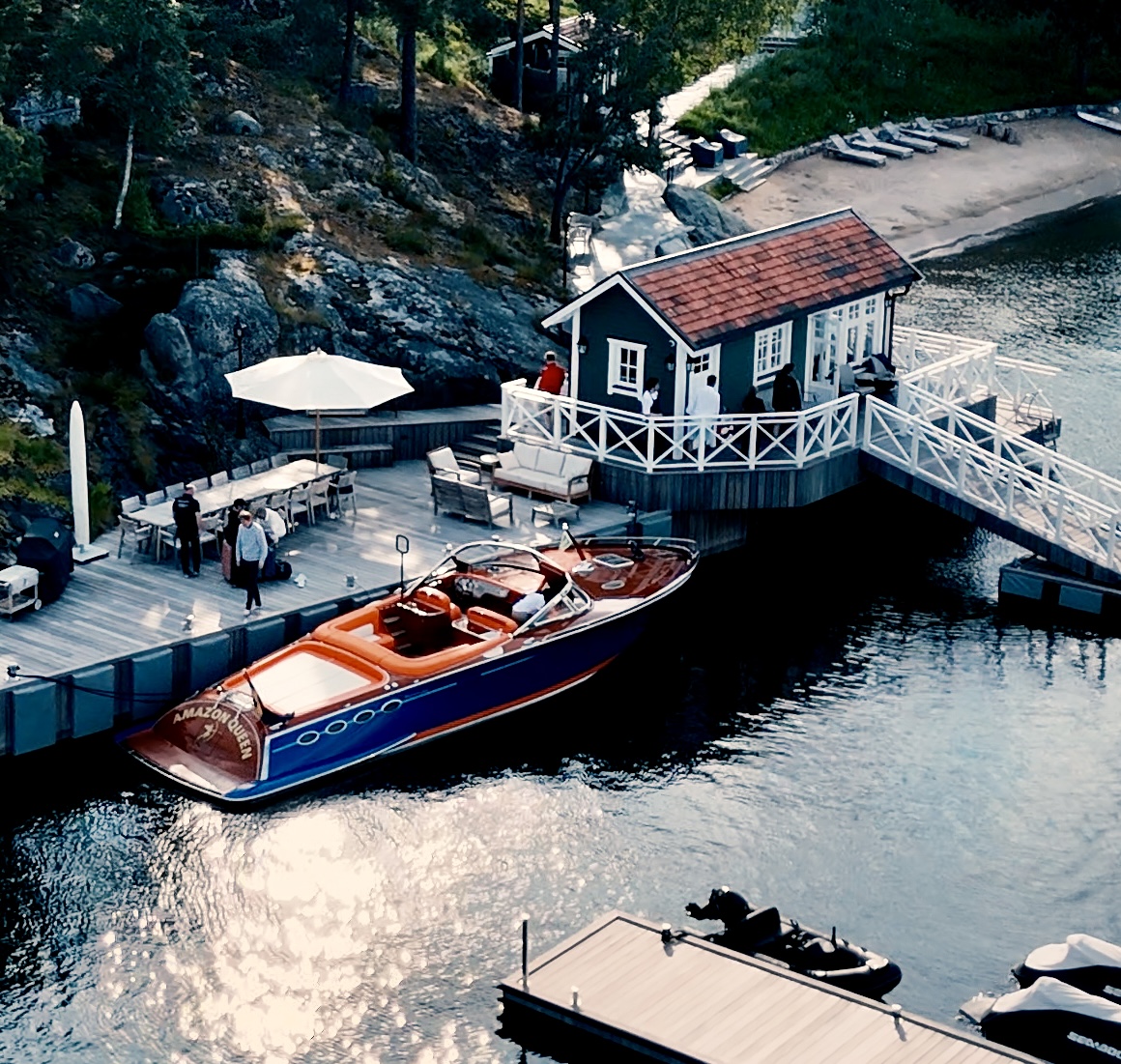
She then crossed the Atlantic by ship to Florida. In the months that followed, Amazon Queen was used from Stuart to Miami and the Bahamas, as well as for J Craft demonstration runs, photo shoots and the Palm Beach Boat Show. From Florida she moved to Tennessee, where she now spends the summer on the Tennessee River system at Coyle's home in Knoxville. In October 2026, the plan is for her to move to Sarasota on Florida's Gulf Coast, where she will remain until late spring 2027. In March 2027, she is expected to return to Palm Beach by circumnavigating Florida from Sarasota via the Keys.


It is a remarkable first year, not because the distances alone are extraordinary, but because the boat has remained at home in each setting.
The Baltic, the Mediterranean, the Atlantic, Tennessee and the Gulf do not ask the same things of a boat. Nor do they ask the same things of an owner. A yacht that feels natural in one harbour can begin to feel theatrical in another. A boat that is delightful for one summer week can become impractical when placed inside the actual pattern of a family's year.

Amazon Queen has shown a different kind of range. She can sit at a private dock in Tennessee and still belong to the Riviera. She can move by road, travel by ship, run inland waters, cross exposed water and return to the quiet routine of home use without losing the character that made her desirable in the first place.
That range is central to the J Craft Torpedo.
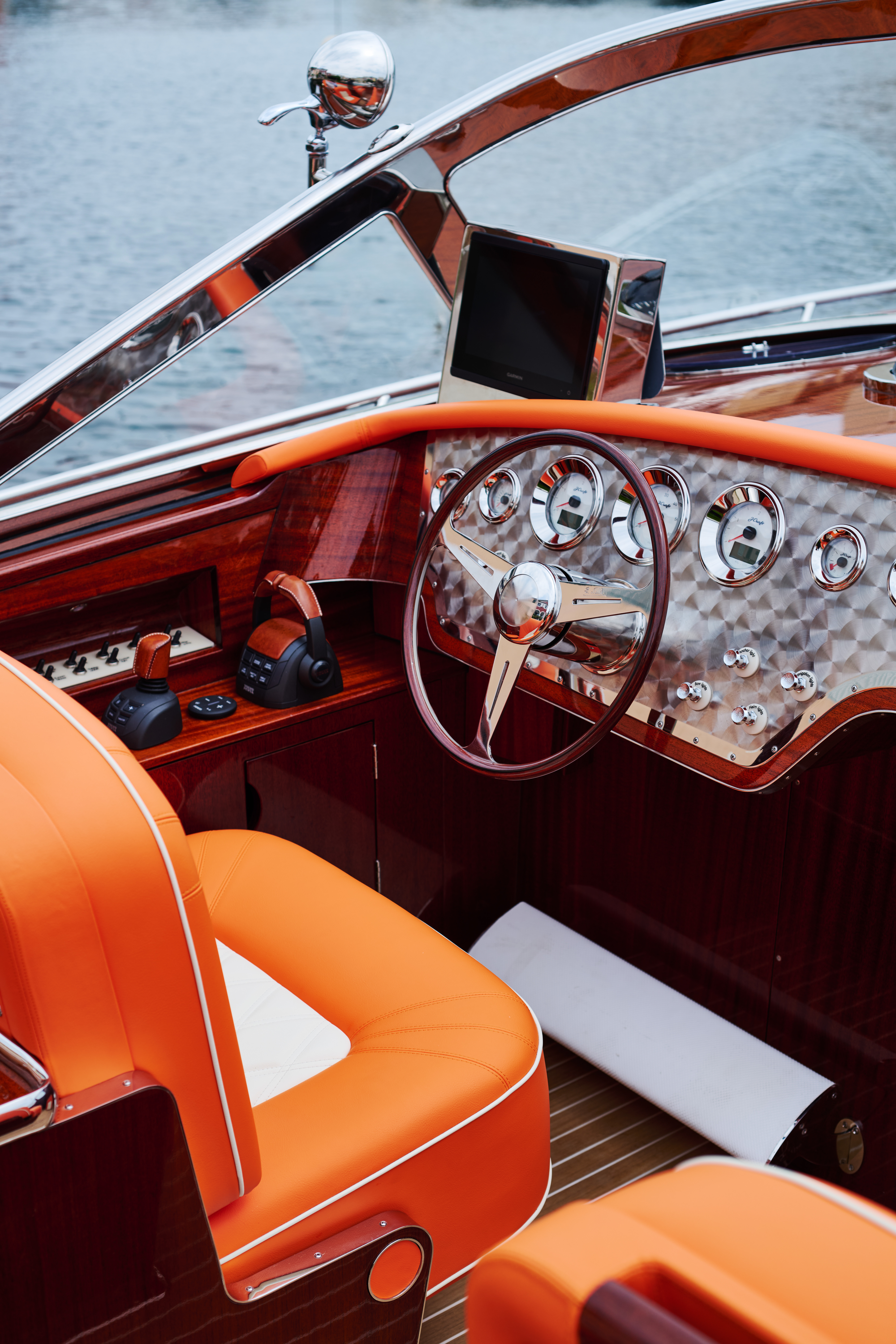
At first glance, the emotional references are familiar: mahogany, tumblehome, long foredeck, polished metal, a low silhouette and the particular confidence of a boat drawn with proportion rather than fashion in mind. Amazon Queen carries that language with unusual force. Her metallic Hohenzollern blue hull, Hermès orange cockpit, Fortuny interior and hand-finished mahogany give her an unmistakable presence.
But the Torpedo is not a traditional wooden boat in modern costume. The distinction matters. The warmth and tactility of wood remain where they should be felt and seen. The structural work is carried by modern composite construction, integrated systems and contemporary propulsion. The result is not nostalgia. It is a modern yacht with enough classic grace to hold an owner's emotion, and enough modern engineering to be used without excessive ceremony.
Coyle came to J Craft with a genuine affection for wooden boats. He owns a 1927 Chris-Craft and understands the appeal of classic mahogany from experience rather than from image. That makes Amazon Queen's role more interesting. She does not replace that attachment. She answers it in a different way.
The question is not whether a Torpedo can stir the same affection as a classic runabout. It clearly can. The better question is what happens when that affection is joined to a boat that can be transported, handled, maintained and used with fewer of the constraints that normally come with traditional wooden ownership.
In Amazon Queen's first year, the answer has been use.
After 14 months, Amazon Queen has recorded 288 engine hours. More than 50 of those have come since she returned to US shores in late March, with the season still continuing. For a yacht built around beauty, proportion and hand-finished detail, those figures matter. They show not only that the structure, engines and construction are prepared for real use, but that the owner wants to keep using her.

There is a simple ownership truth beneath that number. The cost of a boat runs across the whole year, regardless of whether she is used often or only in a short season. In many classic-yacht ownership models, the boat lives far from everyday life and returns enjoyment only when the owner travels to her. The Torpedo argument is different: because she is small enough for the lake and big enough for the sea, she can move with the owner and remain close enough to use. Money that might otherwise disappear into storage, winterisation and distance can instead support access, protection and time on the water.
The boat fits a life that moves between Tennessee and Florida, between inland water and coastal water, between familiar home waters and cruising grounds where local knowledge matters. At Knoxville, she is not a distant object waiting for the next season. She lives at the dock, close to the house, on a lift, ready to be part of an ordinary day.
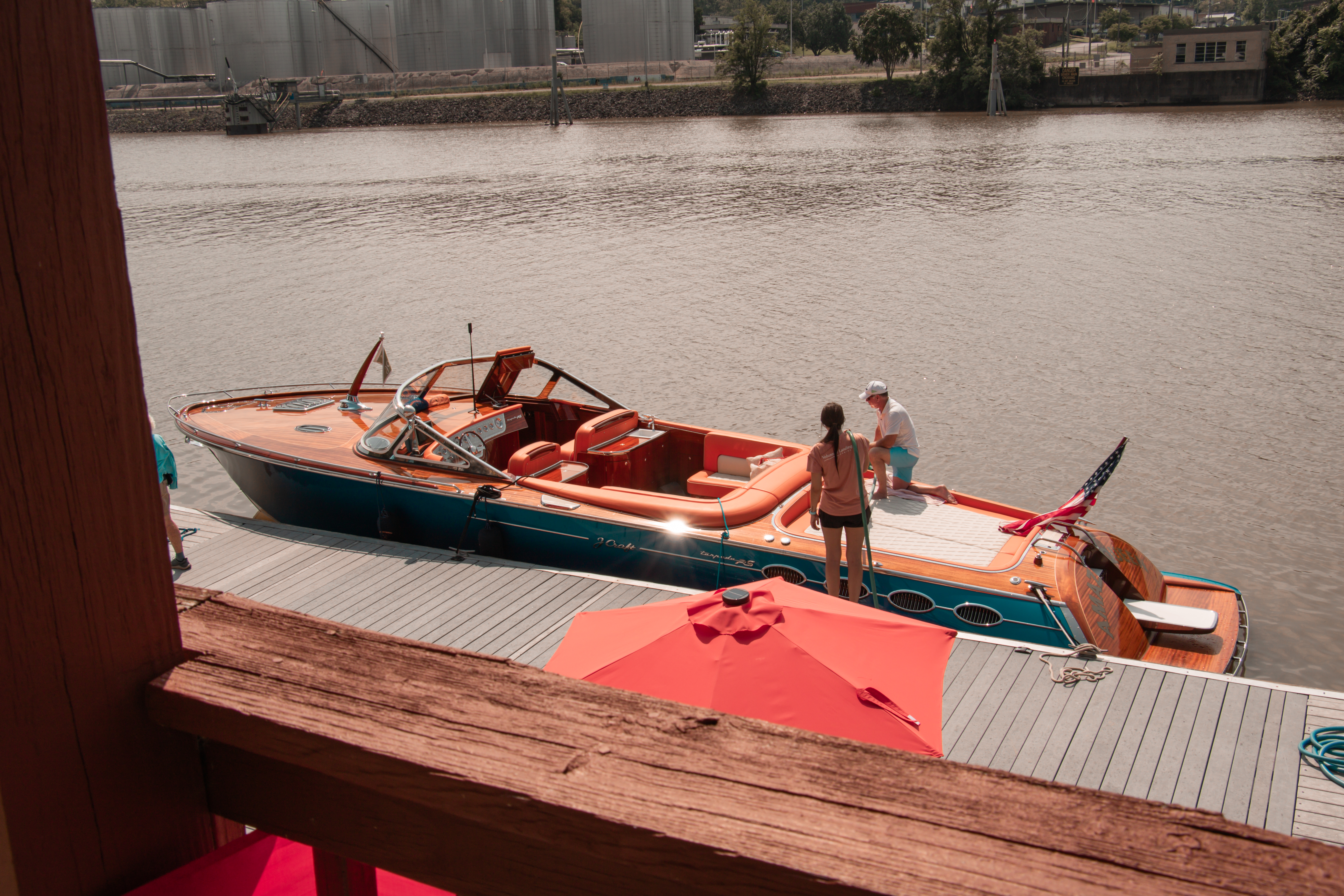
That changes the nature of ownership. When a boat is nearby, protected and easy to prepare, use becomes less formal. A short run becomes worthwhile. A spontaneous afternoon becomes realistic. The decision to go out no longer has to carry the weight of a full expedition.
Jacques Sicotte made the same point in another geography, the south of France with his Torpedo "Temptation": school runs, quick rides to St Tropez instead of the car, and spontaneous trips to Corsica. Amazon Queen turns the same instinct into a year-round American proof point.
This is one reason size matters. The Torpedo is substantial enough to feel capable and composed, but still compact enough to be moved intelligently between places. She does not have to move in only one way. Where the geography allows it, she can travel on her own keel: the Hamptons and Nantucket in summer, Florida in winter, or any other connected cruising pattern that suits the owner. Where the owner's life moves between inland lake and sea, Amazon Queen can be transported by road on her own custom trailer. Across oceans, she can be shipped. At home, she can be kept on a lift, covered and within reach. Those practical details may seem secondary beside the varnish and the line of the hull, but they are what allow the boat to become part of life rather than apart from it.
The boat is not kept apart from life. She becomes a firm part of it.
Crew belongs in the same practical equation. Amazon Queen is a sophisticated yacht, and there are moments when professional or local support is sensible. Entering unfamiliar waters for the first time, whether in the Baltic or the Mediterranean, is exactly the kind of situation where local knowledge adds confidence. But that is different from a boat that requires habitual crew for ordinary enjoyment.
In waters Coyle knows well, including Knoxville, the Tennessee River system, the Atlantic and the Gulf, Amazon Queen can be owner-operated. That distinction is important. It gives the owner the freedom to use help when it improves the experience, without making the presence of crew the precondition for every outing.
For many owners, that is the difference between a boat that is admired and a boat that is used.
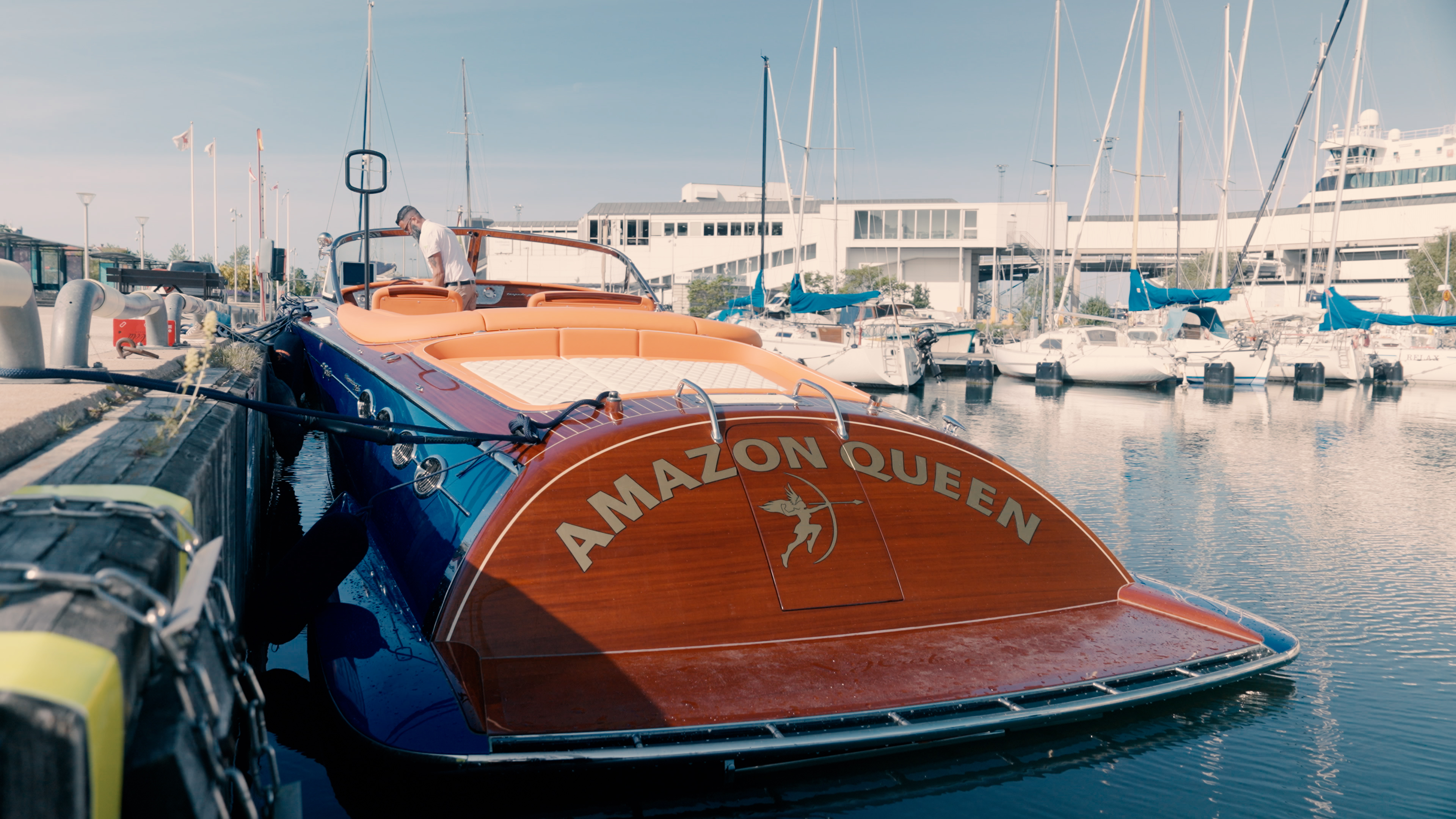
Amazon Queen's individuality also belongs to the way she is used. Her name reflects Rejane Coyle's connection to the Amazon region of Brazil. The woman-warrior bow-and-arrow motif on the transom, designed by Rejane's daughter and echoed in the upholstery and cushions, gives the yacht a personal identity that runs through the design rather than sitting on the surface. The Fortuny interior, with Sarah Magness of Studio Magness, joins Venetian fabric, Swedish craftsmanship and the owners' colour in one commission.


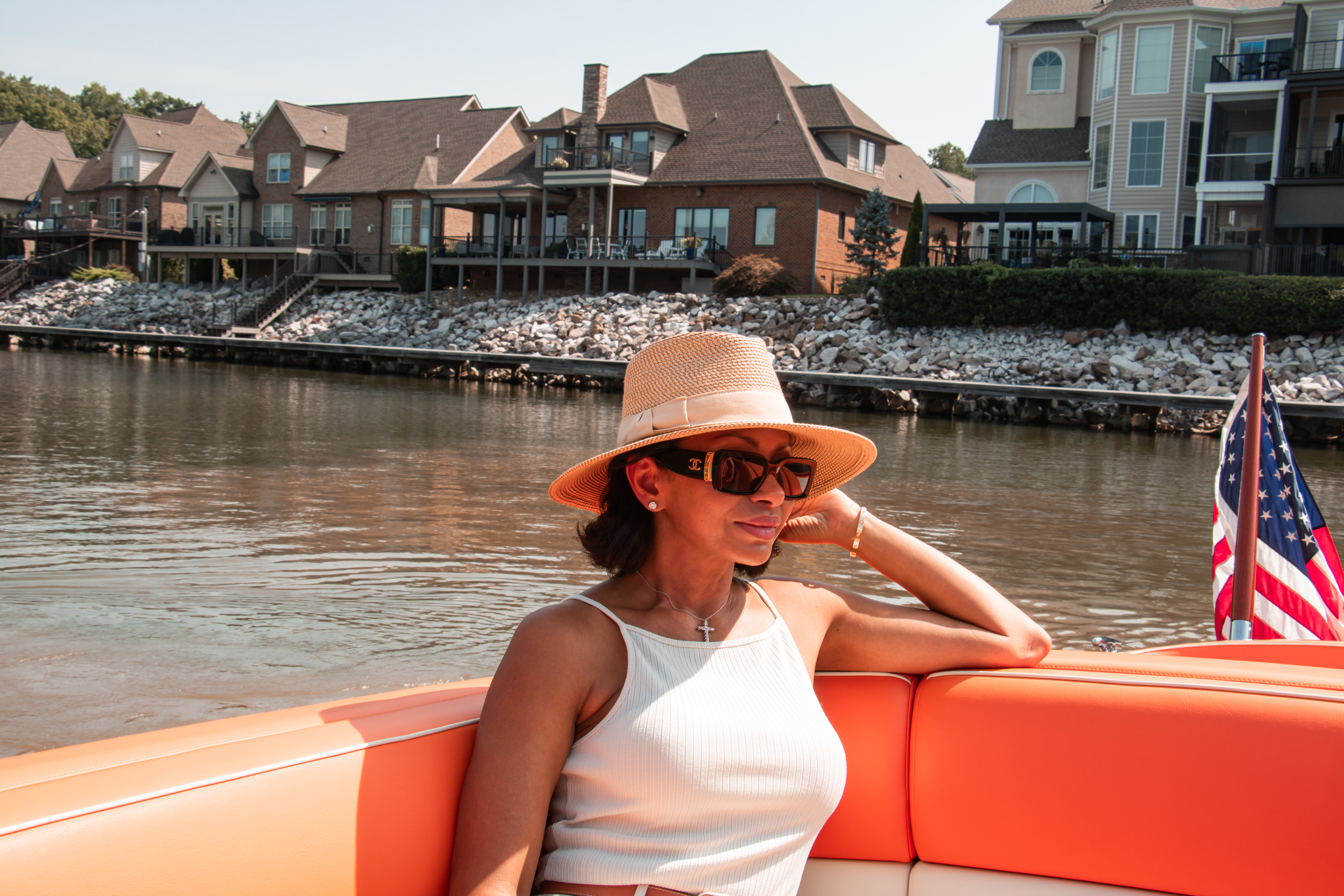
This is where custom work has its proper role. It should not make a yacht precious in the restrictive sense. It should make her more clearly belong to the people who use her.
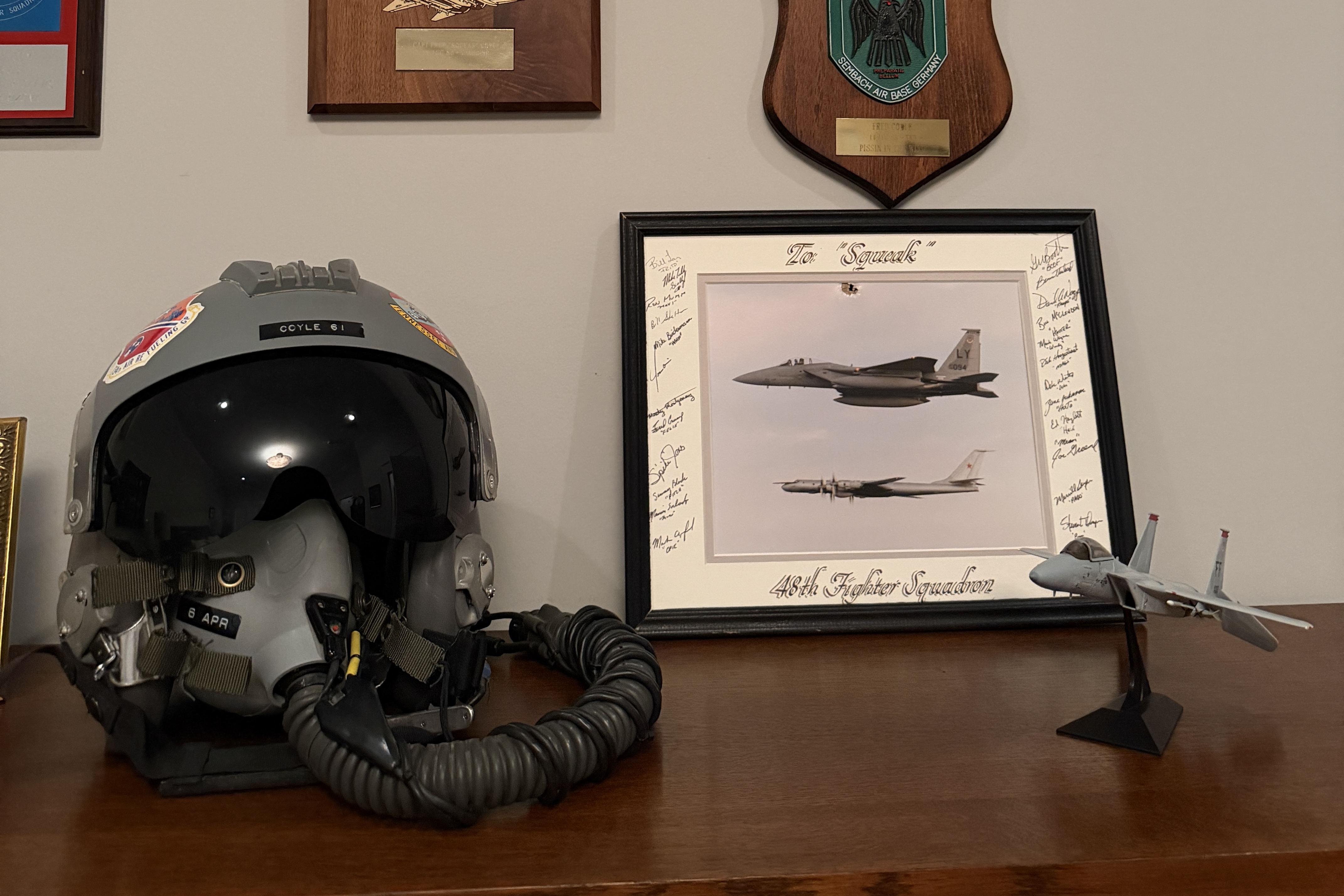
Amazon Queen's handling has been equally important to that sense of use. Coyle's background as a former USAF fighter jet pilot gives him a particular sensitivity to balance, response and control. In his earlier J Craft Owners' Tale, he described the Torpedo as unusually intuitive at the helm: responsive almost at the moment of intention, and able to bank through a turn in a way that makes passengers feel held rather than thrown sideways.
That quality is more than performance theatre. It affects confidence.
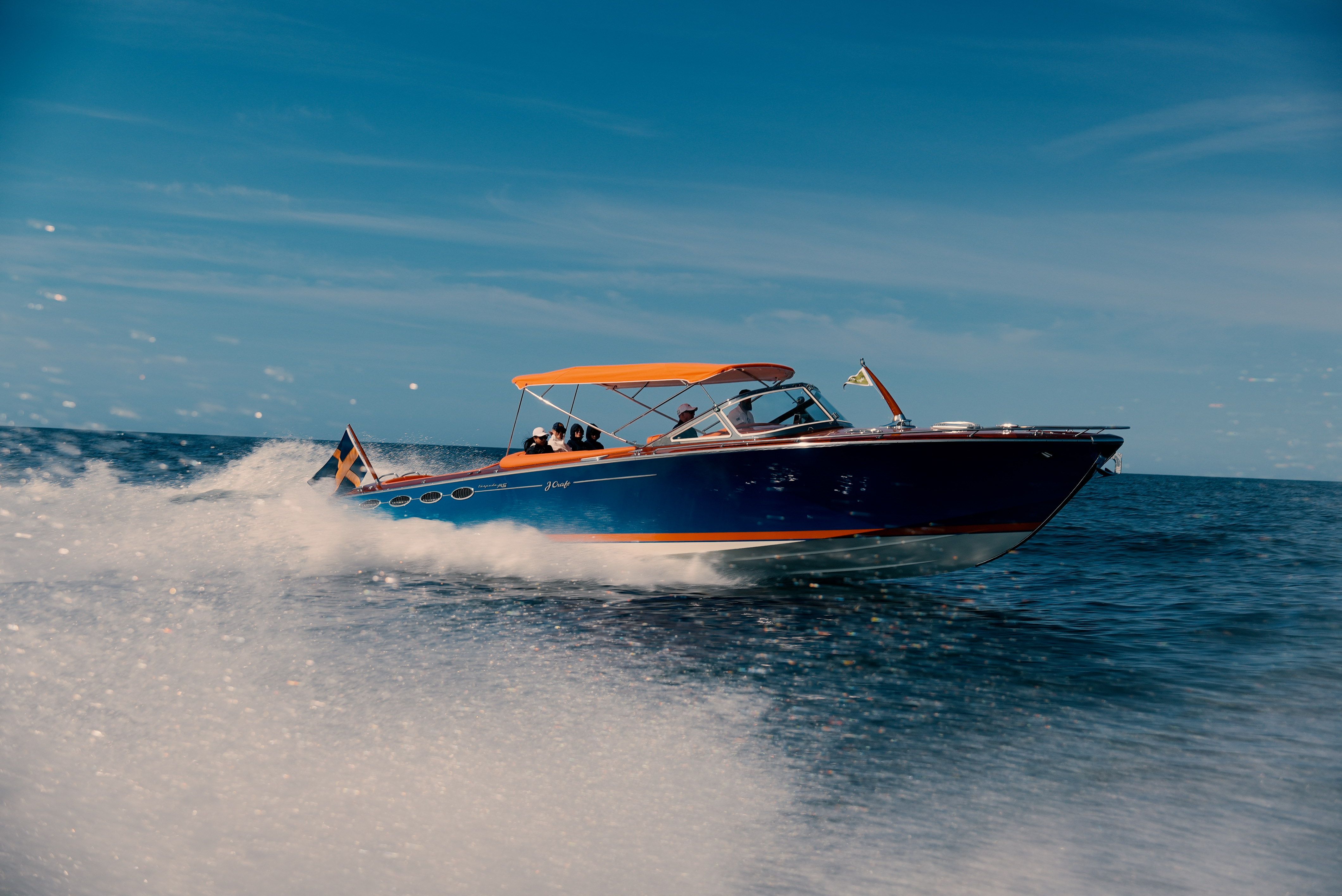
A fast boat that unsettles its passengers will tend to be used with restraint. A boat that communicates clearly, turns cleanly and remains composed gives its owner more reason to go out, and more reason to invite others aboard. The Torpedo's speed is part of the attraction, but in Amazon Queen's story the more important point is the way speed is made usable.

The technology beneath that behaviour is deliberately quiet. Volvo Penta IPS, joystick control, navigation systems, stabilisation and the broader hidden architecture of the Torpedo are not there to dominate the experience. They are there to support it. The better they work, the less they need to announce themselves. Their value is felt in docking, turning, passage-making, confidence and frequency of use.

That frequency changes the value of a boat.

No yacht in this category is bought as a necessity. Emotion is part of the decision, and rightly so. But there is a difference between emotion preserved at a distance and emotion returned again and again through use. A boat that is difficult to access, costly to lay up, exposed to seasonal weather risk or dependent on repeated transport and preparation can become occasional even when the owner loves her.
Amazon Queen shows another model. Her lift, covered berth, dock arrangement and custom trailer are not just accessories. They are tools of use. The custom trailer, at roughly USD 30,000, and the lift, at roughly USD 50,000, are one-time investments in mobility, protection and access. They can reduce repeated handling and transport costs over time, but their more important effect is behavioural: they make it easier to decide to go boating. The economics are not incidental. If the boat is moved away from Florida for the hurricane season, two substantial cost items can change at once: insurance no longer has to include hurricane cover for a boat sitting in Florida, and winterisation or comparable hurricane-season lay-up can be avoided or reduced. On that basis, the lift and trailer are not ornamental extras. They are infrastructure that can pay back over two to three years, while crucially also making the boat available for more days of the year.
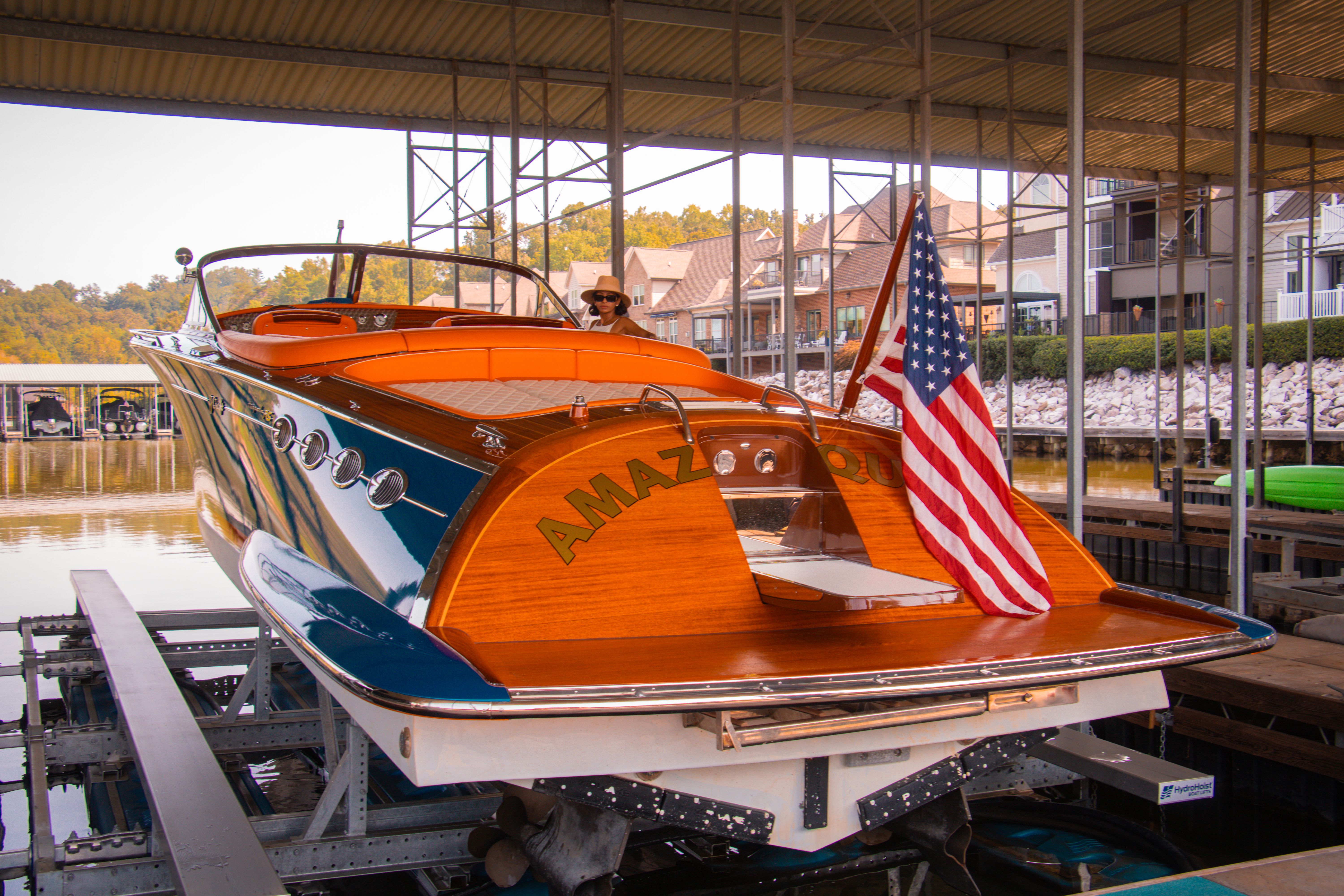
The point is not to make ownership sound utilitarian. It is to recognise that enjoyment depends on access. The more often a boat can be used, the more often she can return what drew the owner to her in the first place. In that sense, Amazon Queen's hours are not only mechanical hours. They are proof of an ownership model working as intended.
Amazon Queen's year has included formal moments: Monaco, Palm Beach, demonstration runs, photo shoots. But its real strength lies elsewhere. It lies in the fact that the same yacht can move from those public settings back into the private rhythm of a home dock, a summer afternoon, a football weekend, a run through known waters, or a longer seasonal move to Florida.
That is a rare balance.
Many boats offer beauty. Many offer speed. Some offer heritage, others convenience. The Torpedo's claim is more specific: classic emotion made available through modern construction, modern systems and practical ownership. Amazon Queen makes that claim visible because her first year has required all of it.
The mahogany matters. So does the composite beneath it.
The colour and interior matter. So does her ability to settle naturally into her owner's life.
The handling matters. So does the confidence to use it.
In Amazon Queen, the romance has not been kept still. It has travelled, returned home, and gone out again.