Blog
The Evolution of the Icon: Why the J Craft Torpedo is Redefining the Wooden Boat
Discover why the J Craft Torpedo is not a traditional wooden boat – and why that matters. Explore the engineering behind its vacuum-infused GRP hull, genuine mahogany veneer, and 9,300 hours of Gotland craftsmanship.
Published January 3, 2026
Updated September 10, 2026
Words by: J Craft
In the high-tonnage harbours of Monaco and Saint-Tropez, where superyachts often prioritise sheer scale over nuanced design, the J Craft Torpedo presents a striking visual paradox. To the casual observer, it appears to be a preserved relic of the mid-century era – a classic wooden boat defined by the lustrous curves and chrome accents of the dolce vita period. However, for the maritime connoisseur and naval architect, the vessel represents a sophisticated exercise in modern materials science.
While its silhouette suggests a fair-weather day cruiser, the Torpedo carries a Type B open sea certification – rated for seas of up to four metres (thirteen feet). She is also capable of running at up to 47 knots (approximately 54 mph). Add to that a 300nm range at a cruise speed of 30 knots – remarkable for a 42-foot yacht and a significant differentiator from competitors who sacrifice range for speed or size – and the Torpedo begins to look less like a day cruiser and more like a serious offshore platform dressed in evening wear.
The central technical insight for any prospective owner is that the J Craft Torpedo is not a wooden boat in the traditional, organic sense. It is a high-performance fibreglass composite vessel finished with a genuine mahogany veneer. This distinction is critical for understanding both the boat’s seakeeping qualities and the practicalities of wooden boat maintenance. By moving away from solid-timber hull construction, J Craft has decoupled the aesthetic warmth of traditional craftsmanship from the structural vulnerabilities of organic materials. The result is a yacht that offers the tactile soul of heritage boatbuilding without the prohibitive upkeep and structural instability historically associated with solid wood hulls.
The Torpedo’s origin story is itself a testament to this distinction. J Craft’s founder, Björn Jansson, loved the classic aesthetic – the burnished mahogany and chrome of the Riva Aquarama, the Chris-Craft Continental, the great mid-century wooden speedboats that defined elegance on the water. But Jansson was also a Nordic mariner, and when a fellow mariner’s Riva broke apart at sea, he resolved to build something that looked just as beautiful but could survive conditions those iconic boats never could. The J Craft Torpedo is the answer he arrived at: a fibreglass composite hull dressed in genuine mahogany, engineered for the North and Baltic Seas, but styled for the Côte d’Azur.
Table of Contents
1. Beneath the Mahogany: The Engineering Reality
2. The Limitations of Solid Wood and the Evolution of Control
3. 9,300 Hours: The New Definition of “Handmade”
4. Addressing the Myths of “Wooden Boat Maintenance”
5. The Owner’s Perspective: Mastery of the Waves
6. Invisible Confidence: Technology and Tradition
7. Conclusion: A Legacy Built to Last
1. Beneath the Mahogany: The Engineering Reality
The structural integrity of the Torpedo is rooted in modern material science rather than traditional carpentry alone. The hull is constructed using vacuum-infused GRP, a process that ensures a superior fibre-to-resin ratio and millimetric precision.
In a significant move toward sustainable engineering, J Craft transitioned its core materials from standard PVC to a recyclable PET (polyethylene terephthalate) core. This PET material is derived specifically from post-consumer plastics, aligning the vessel’s construction with modern circular economy standards without compromising on compressive strength or shear modulus.
The use of a “dry closed process” for resin injection represents a departure from the “wet” hand-rolled techniques that dominated the industry for decades. By vacuum-infusing recyclable vinylester resin between raw sheets, the core configuration department creates a solid, lightweight, and exceptionally strong monolithic structure. This technique uses fewer solvents, providing environmental benefits and a superior structural finish compared to traditional laminating methods.
As Chief Master Builder Johan Hallén – who has overseen every build since the company’s inception – explains, the choice of modern materials is a deliberate act of respect for tradition. By utilising composite technology where it matters most – for strength, durability, and immunity to moisture – the shipyard preserves the soul of the boat while eliminating the frustrations of historic designs. The hull is built to be exact to the millimetre, ensuring that all subsequent joinery remains perfectly aligned over the vessel’s lifetime.
As standard, the mahogany veneer is applied to the deck and superstructure, while the hull is finished in the owner’s choice of colour – selected from J Craft’s existing palette or, as with Amazon Queen and Babebi, created as a fully bespoke finish. For those who want the complete wooden boat aesthetic, the mahogany veneer can also be extended to the hull, achieving the full classic look without any of the structural compromises of solid timber construction.

2. The Limitations of Solid Wood and the Evolution of Control
While solid wooden hulls remain objects of poetic beauty, they present significant engineering hurdles for modern high-performance yachting. Traditional timber is an atmospheric sponge; it is a living material that reacts to shifts in humidity and temperature. This inherent instability leads to several practical limitations:
Hydrodynamic Efficiency and Weight: Solid wood is significantly heavier than composite equivalents. This increased mass requires more power for acceleration and higher fuel consumption to maintain cruising speeds.
Atmospheric Sensitivity: Wood expands and contracts based on moisture content. Over time, this movement compromises structural precision, leading to the cracking and swelling that necessitates constant sand-and-seal intervention.
Water Absorption: Organic hulls eventually absorb water, increasing the weight of the boat and degrading the structural joins and finish through moisture ingress and osmosis.
The evolution of J Craft also highlights a leap in the man-machine interface. The earlier Cabrio Cruiser models were direct controlled, requiring the operator to manage four separate controls – two for gears and two for throttles – simultaneously. This demanded significant skill and constant attention. In contrast, the Torpedo utilises the Volvo Penta IPS (Inboard Performance System), which replaces those four controls with a single, intuitive joystick. This allows for millimetric precision during docking and a 30% improvement in fuel efficiency.
The stability of the Torpedo’s composite Deep-V hull allows it to slice through four-metre waves at 47 knots – a feat of structural resilience that would be impossible for a traditional solid-timber hull to sustain without eventual degradation.
3. 9,300 Hours: The New Definition of “Handmade”
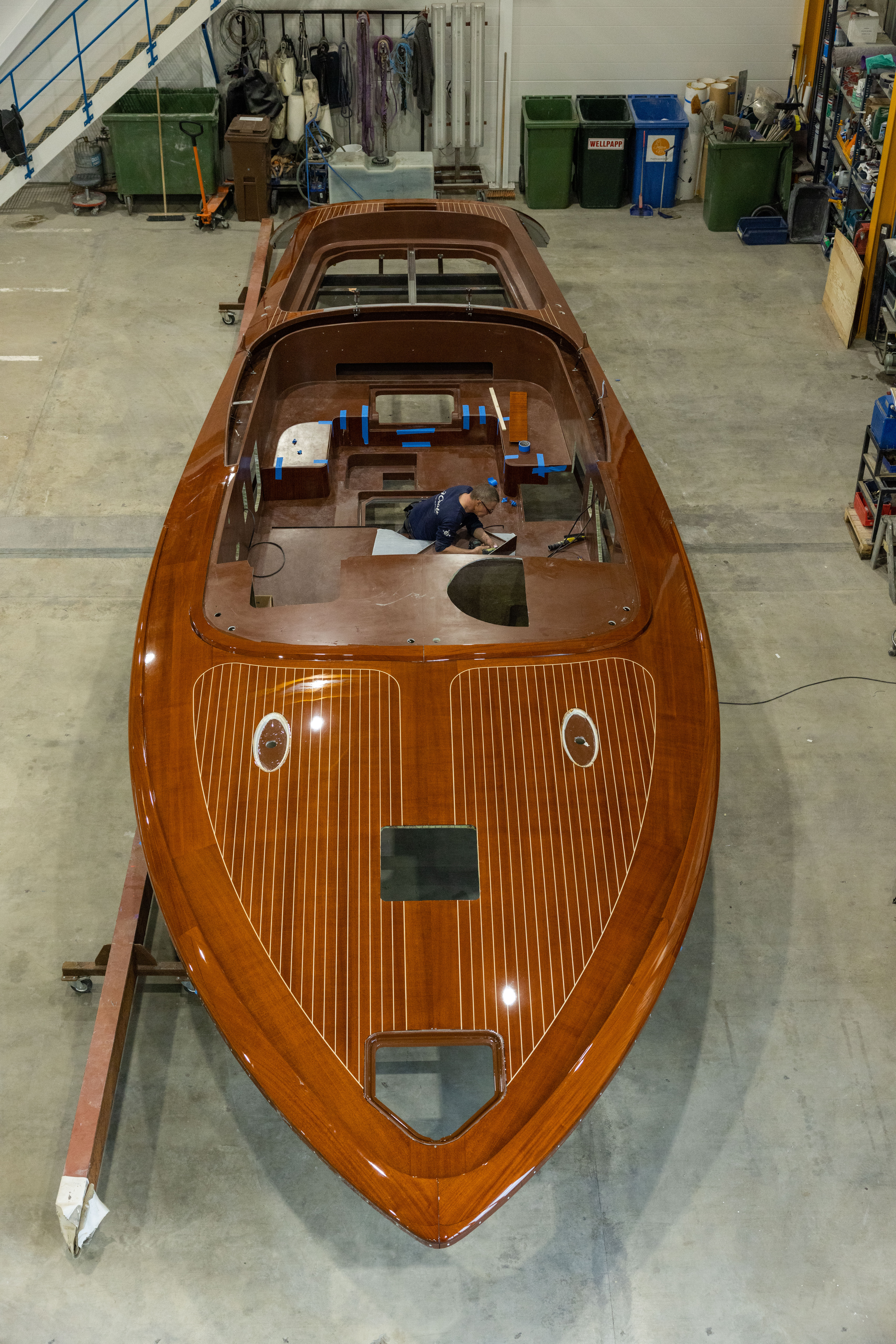
At the Visby shipyard on the island of Gotland, “handmade” is a metric of extraordinary labour investment. The latest Torpedo, Amazon Queen, required 9,300 manual hours to complete – a build that took approximately one year from first layup to sea trial. The build process is vividly illustrated by a timelapse video of Torpedo Acheron on the J Craft website, which captures a separate build – compressing nearly 9,000 hours of painstaking craftsmanship into a little less than a minute. Each build is executed by a team of 10 craftsmen, including carpenters, varnishers, welders, and joiners.
This artisanal process relies on techniques that trace back to the island’s 1,000-year-old Viking heritage. The solid wood components of the transom are shaped using a method inherited from that heritage: steam bending. Each plank is heated to 120ºC – a temperature at which the wood’s molecular structure transforms, the fibres becoming chemically and physically supple. While still yielding, each plank is bent by hand into its mould and clamped into place, where it remains for a full week – the curve setting permanently into the grain. As Hallén notes, the transformation is irreversible: the wood is changed so fundamentally that the team has only one attempt. The bend must be correct the first time.
This heritage is further reinforced by the island’s connection to the Krampmacken project – a reconstruction of a Viking Age ship that sailed from Gotland to Istanbul in the 1980s, proving the incredible durability and manoeuvrability of Norse clinker-built designs.
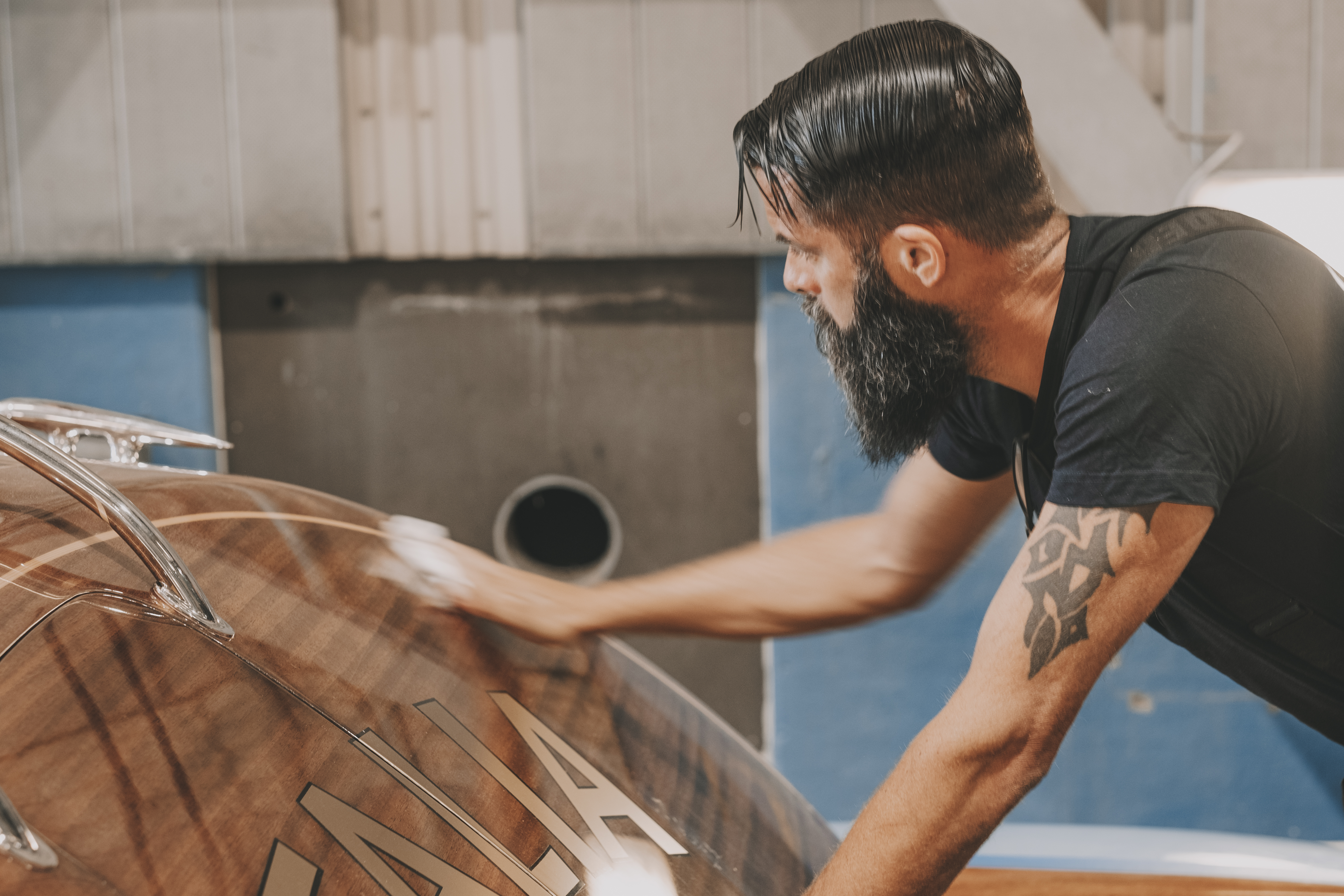
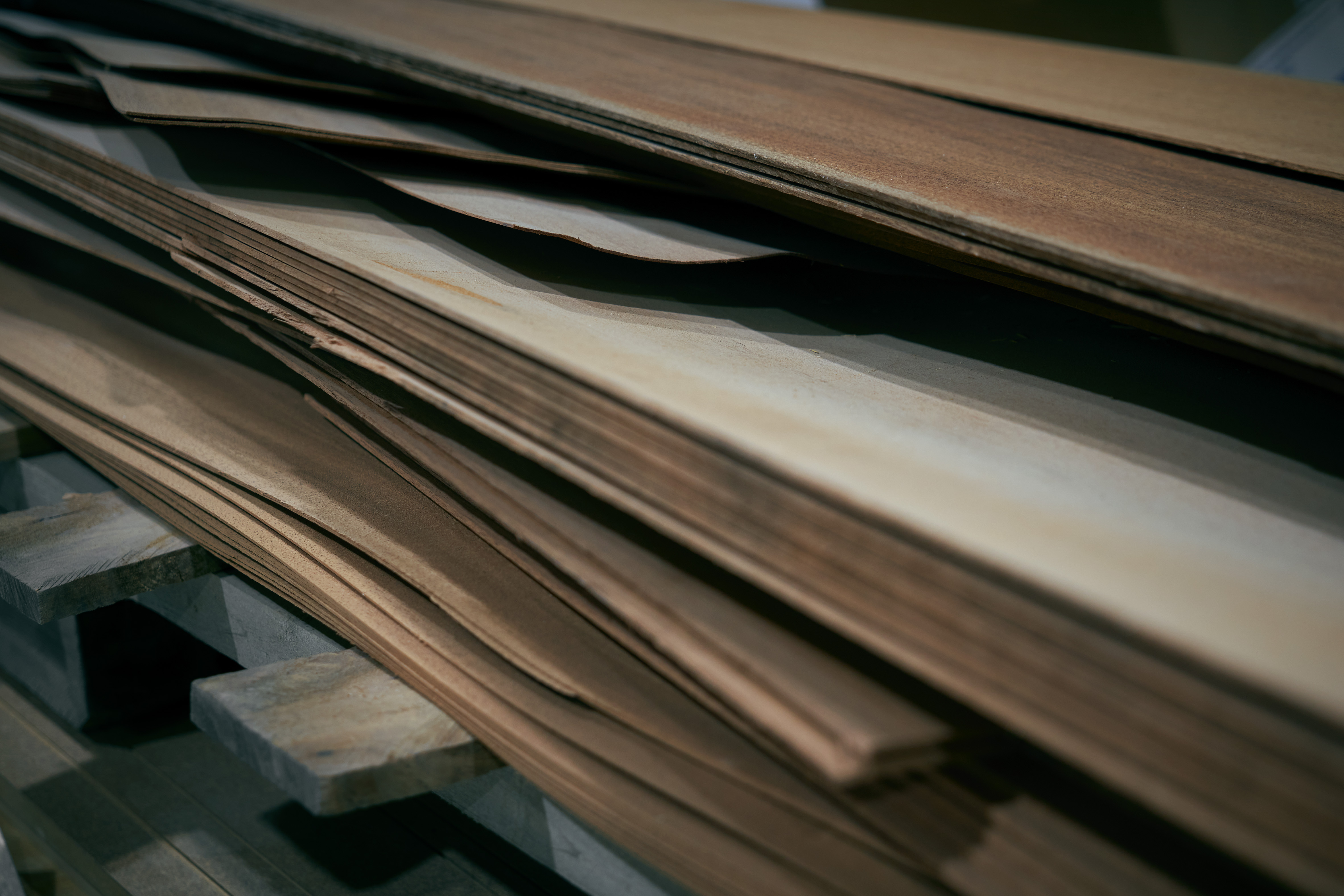
J Craft applies this “Veneer, Not Imitation” philosophy by hand-laying narrow, book-matched strips of real West African mahogany over the composite superstructure. The finishing process is equally rigorous: 16 layers of epoxy resin are brushed on, with every fourth layer cured and hand-sanded to a perfectly smooth surface, followed by four final layers of clear varnish to provide depth of colour and UV protection.
4. Addressing the Myths of “Wooden Boat Maintenance”
The high-maintenance reputation of wooden boats is the primary deterrent for many sophisticated owners. However, the Torpedo’s hybrid construction – merging a GRP hull with mahogany cladding – radically reduces upkeep. Because the wood does not bear structural stress or remain submerged, it is far less prone to the swelling and cracking found in traditional timber vessels.
The longevity of this finish is verified by the experience of longtime owners. Jacques Sicotte, a nuclear engineer who has owned his Torpedo, Temptation, since 2010, reports that after 13 years of regular use in the Mediterranean, the boat has not yet required re-varnishing. He attributes this to the quality of the original 20-coat application and his own engineering discipline in maintaining the vessel. While the colour has lightened slightly over the decade, the integrity of the finish remains intact – a testament to the Gotland team’s workmanship.
Similarly, owner Alfred Coyle, a former U.S. Air Force F-15 fighter pilot, cited the reduction in labour as the primary reason for commissioning a Torpedo. Coyle, who also owns a 1927 Chris-Craft, remarked that while he loved the aesthetic of his classic wooden boat, he sought to escape the “lot of work” required to keep a solid-timber vessel operational. The Torpedo offered him the classic mid-century tumblehome design he desired, but with the practical ease of a modern fibreglass hull.
5. The Owner’s Perspective: Mastery of the Waves
For owners with backgrounds in high-stakes engineering and aviation, the Torpedo’s appeal lies in its technical performance as much as its artistry. Alfred Coyle compares the handling of his Torpedo, Amazon Queen – named in honour of his Brazilian wife, Rejane, who is an interior designer – to his time in the cockpit of a fighter jet. He observes that while many modern boats stay flat during turns, subjecting passengers to lateral forces, the Torpedo “banks like an airplane.” This motion centres the gravitational forces through the passengers’ bodies, creating a sense of security even during high-speed manoeuvres.
Jacques Sicotte, who serves as a Ferrari Ambassador, views the Torpedo as functional art, comparing it to the 1961 Jaguar E-Type or the Ferrari Dino – designs that “never age.” From his perspective as an engineer, the boat’s ability to act as a daily driver on the Riviera, bypassing traffic to get from Cannes to Saint-Tropez in 50 minutes, is its greatest luxury. Sicotte’s son, Sebastien, even received a handmade Viking helmet from the Gotland crew during their visit to the shipyard – a gesture that reinforces the personal, artisanal bond between the builder and the owner’s family.

6. Invisible Confidence: Technology and Tradition
The J Craft Torpedo is designed to conceal the extraordinary in plain sight. While the cockpit features a rose-polished steel dashboard and a classic Nardi steering wheel – the same original design as the 1963 Ferrari 250 GTO, produced under special dispensation from Nardi – the systems beneath the mahogany are state-of-the-art. Key integrated systems include:
Volvo Penta IPS Pod System: Twin engines with joystick control allow for millimetric precision and a 30% improvement in hydrodynamic efficiency over shaft drives.
Seakeeper Gyroscopic Stabilisation: This system actively counters roll, ensuring the boat remains stable at anchor or in rough seas, effectively removing weather anxiety.
Dynamic Positioning System (Skyhook): Utilising satellite antennae that are entirely invisible to preserve the classic silhouette, this system holds position automatically – essential for solo preparation in crowded ports.
Garmin/Quatix 8 Wearable Integration: Owners can monitor engine data, receive anchor drift alerts, or steer the boat remotely via wearable technology.
Starlink Connectivity: Hull-integrated with no visible antennae – ensuring the owner is never out of reach, regardless of location.
Zipwake Dynamic Trim Control: A Swedish-engineered automatic interceptor system that fine-tunes trim and balance in real time, complementing the Seakeeper – one handles roll, the other pitch and trim.
FLIR Night Vision, Thermal and Infrared Camera: Retractable and hull-integrated until deployed. When active, it overlays thermal awareness onto the digital environment. When not needed, it disappears entirely.
Extended-Life Lithium-Ion Battery Banks: Heating, air conditioning, lighting, and onboard systems can operate for up to ten hours without engaging the generator – enabling silent, self-sufficient time at anchor.
Desalination Plant: Supporting extended use away from shore infrastructure. Combined with the 300nm range at a cruise speed of 30 knots, this transforms the Torpedo from a harbour-dependent day boat into a genuinely self-sufficient offshore vessel.
These advancements allow a single operator to handle the 42-foot vessel with ease – a stark contrast to the demanding manual requirements of vintage cruisers. J Craft provides one dedicated week of hands-on owner training to every new owner, ensuring complete command of every system from day one.
7. Conclusion: A Legacy Built to Last
The J Craft philosophy is one of evolution, not revolution. By maintaining a consistent aesthetic while relentlessly upgrading the underlying technology, the shipyard has created a vessel that functions as a family heirloom. This commitment to longevity is supported by a 90% Swedish-sourced value chain and a shipyard in Visby that operates on renewable energy, utilising wood chips for heating and recovery systems.
The Torpedo is the result of a deliberate engineering choice to solve the inherent problems of the traditional wooden boat. By utilising vacuum-infused composites for the hull and PET recyclable cores derived from post-consumer plastics, J Craft has built a boat for the 21st century that happens to wear the face of the 20th. It provides the connoisseur with the best of both worlds: the reliability and speed of a modern naval platform and the timeless, hand-varnished grace of a Gotland masterpiece.
The wake tells the story: the Torpedo remains an icon redefined – built by Norse warriors for those who value the intersection of heritage and high-tech reality. Not metaphorical warriors. The crew on Gotland are the direct genetic and cultural descendants of the Norsemen who once built longships on this same island – the same people who launched the Krampmacken from these shores to Istanbul. They are islanders for whom boatbuilding has never been an aesthetic exercise but a matter of survival: capable, powerful vessels to navigate some of the most demanding waters on earth. Many of the team are ex-military; their leader, Johan Hallén, is a former mine diver and navy captain who has overseen every J Craft build since the company’s inception. That lineage – Norse to naval, warrior to craftsman – is not marketing language. It is the living thread that runs from the Viking shipyards of a thousand years ago to the workshop floor in Visby today.